The Complete Boat Cover Buyer’s Guide
T-Top cover vs. center console cover vs. center console curtain — and how to order the perfect fit in about two minutes.
- Your boat has a T-Top or hardtop over the console → you need a T-Top Boat Cover.
- Center console boat with no T-Top → you need a Center Console Boat Cover.
- Want to protect the console & seats while the boat stays in the water → you need a Center Console Curtain (not a full cover).
Not sure after reading? Call us — we do this all day.
The three products at a glance
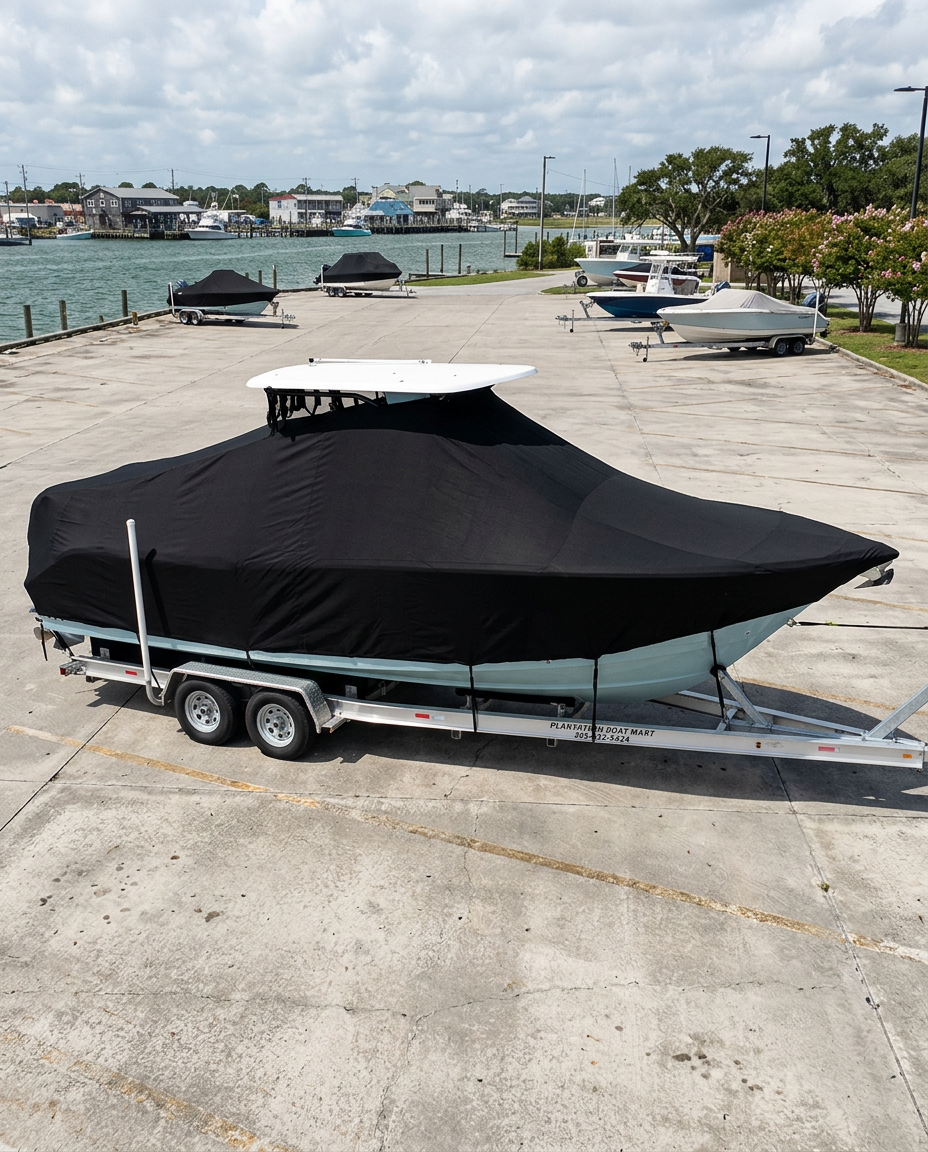
T-Top Boat Cover
Covers the entire boat and is cut to wrap up to and around your T-Top or hardtop frame.
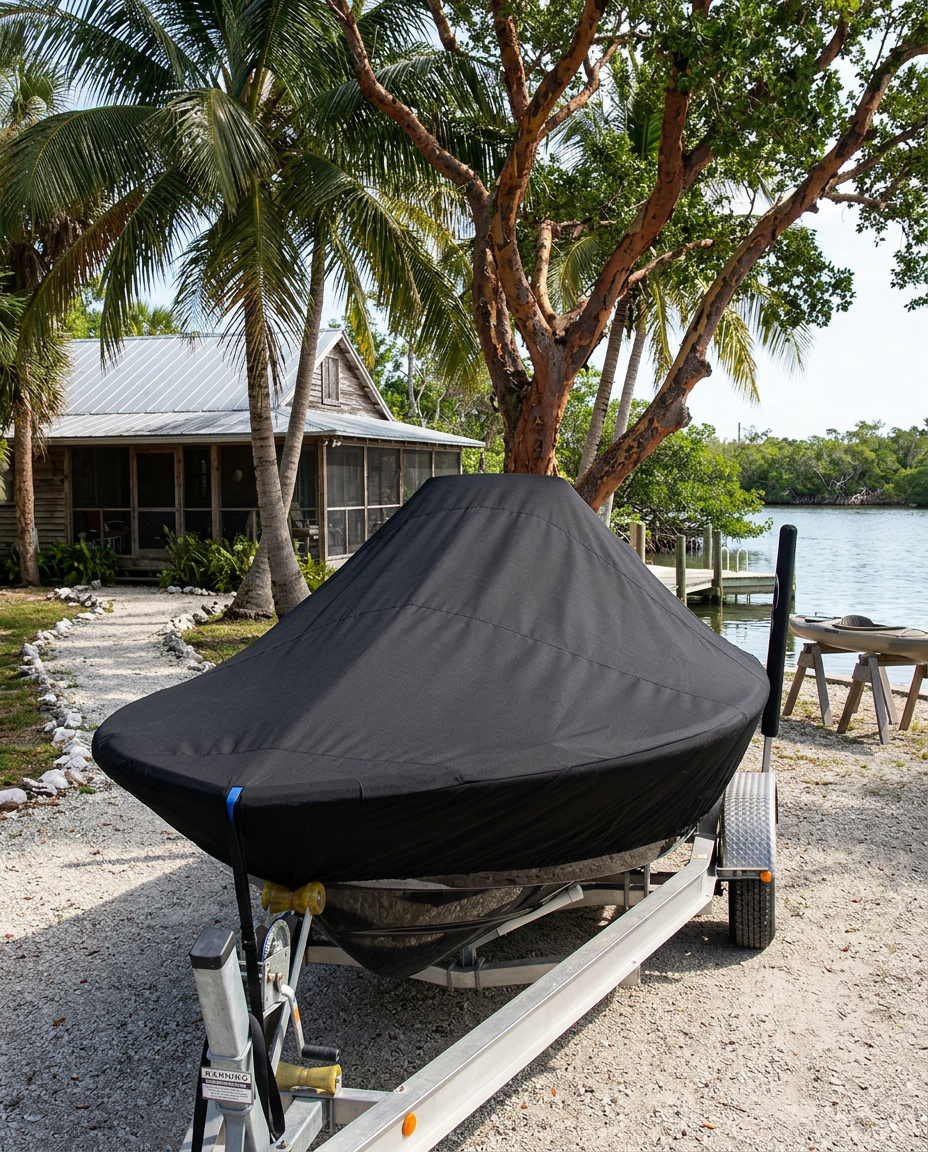
Center Console Cover
Tents over the console and runs bow to stern to protect the whole boat.
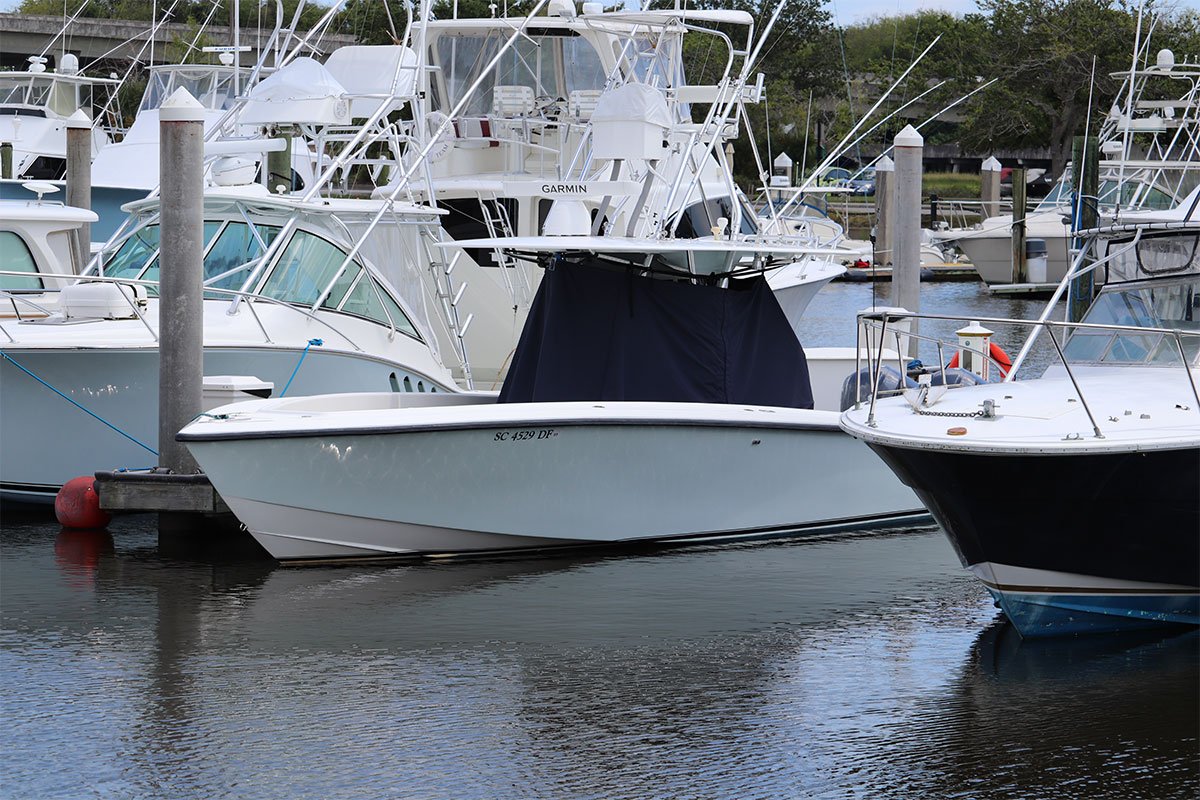
Center Console Curtain
Encloses just the console, helm, electronics & seats. It does not cover the hull.
T-Top vs. center console: the quick test
Look at your console. If there’s a rigid roof standing over the helm (a T-Top, hardtop, or canvas top on a frame), choose the T-Top Boat Cover — it’s cut to wrap around that structure. If your console has no top, choose the Center Console Boat Cover. Picking the wrong one means the cover won’t fit around your top, so this is the one to get right.
What a boat cover actually protects against
A good cover is cheap insurance against the slow, expensive damage the sun and weather do to a parked boat:
- UV & sun damage — sunlight oxidizes gelcoat (that chalky, faded look) and cracks and fades vinyl seats, trim, and dash electronics. Keeping the sun off is the single biggest thing a cover does.
- Rain, water pooling & the mildew that follows — a cover keeps rain out of the cockpit and bilge, and a breathable, supported cover lets interior moisture escape so mold and mildew don’t take hold.
- Bird droppings, tree sap, dust, pollen & leaves — bird droppings are acidic and can etch and stain gelcoat, and leaves clog your drains. A cover keeps it all off and cuts your cleaning time.
- Pests — a snug, well-fitting cover helps keep rodents, insects, and spiders from nesting in your seats and wiring.
What a cover won’t do (so you’re not surprised): it isn’t built for hurricanes or severe storms, hail, flooding, or theft. In serious weather, haul the boat out or follow a storm plan — don’t rely on a cover.
How ordering works (no tape measure needed)
For every boat we already pattern, you don’t measure anything. Each cover is cut from a master pattern made for your exact make, model, and year. Your job is simply:
- Find your exact boat — make, model, and year.
- Answer a few questions about how your boat is set up (top, motors, accessories, storage).
- Pick your fabric and color.
Every order question, explained
The options are nearly identical for T-Top and center console covers, with a couple of differences we’ll flag. Here’s what each one means and why we ask.
Fabric & protection
Your fabric grade sets durability and warranty length. Heavier fabric and Sunbrella last longer in the sun.
| Fabric | Colors | Fabric warranty |
|---|---|---|
| 7oz | Black | 3 years |
| 9oz | Navy, Black | 5 years |
| Sunbrella | Marine Blue, Black, Smoke | 6 years |
Heavier isn’t the only thing that matters. Our fabrics are solution-dyed (color runs all the way through the fiber, so it resists fading) and breathable on purpose — a fully “waterproof” cover with no way to breathe traps moisture underneath and actually causes mildew. Sunbrella acrylic also holds up longest in strong sun, keeping its strength for years where lighter polyester slowly weakens under UV — so if your boat lives in the Florida sun, the heavier and Sunbrella options pay for themselves.
Your exact boat
Year, Make & Boat Style — builders change decks, rails, and console shapes between model years, so we pattern to your exact boat and year.
How your boat is set up
How is your boat stored? (Trailer / Lift / Dry Stack / Jet Dock) — storage affects tie-down points and venting. If you keep it in the water, that’s a curtain, not a cover.
Zipper Access Side (Port / Starboard) — pick the side that’s easiest for you to reach when the boat is parked.
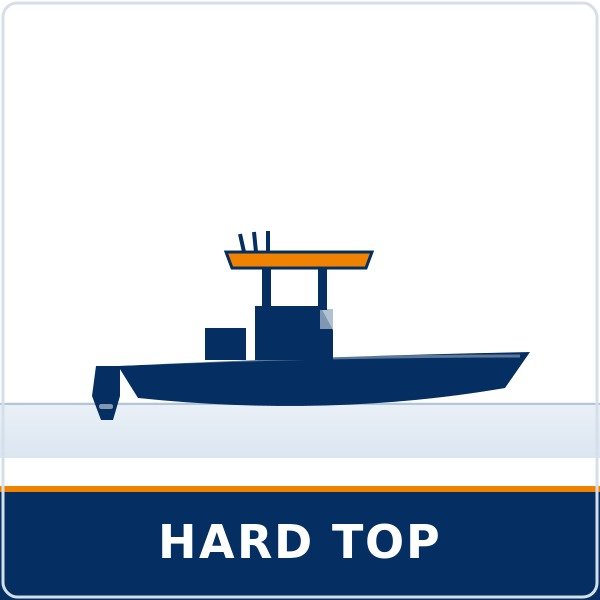
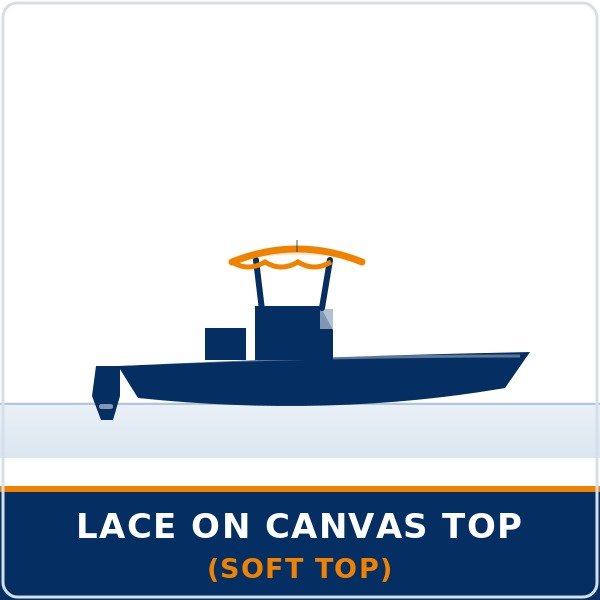
T-Top Type (Hard Top / Canvas / Key West Style) & Aft Support Bars — T-Top covers only. The cover is cut to wrap up to your specific top, so this has to match.
Poling Platform — center console / skiff covers only. We cut the cover to clear it.
Motors & accessories (so the cover clears everything)
Motors / Motor Size & Re-power year — outboard count and size shape the engine pocket so the cover drapes correctly. A newer or bigger motor than stock changes that area.
Bow Rails & Accessories, Ski/Tow Bar, Jack Plate, Power Poles, Trolling Motor — these add-ons change the boat’s footprint, so we cut the cover to fit over them (a removable trolling motor may need to come off first).
Why so many questions? Because the result is a cover that actually fits — snug, no flapping, no water pooling — instead of a one-size-fits-most tarp.
How to find your exact boat
- From the homepage, use “Find Your Boat Cover” and type your make and model.
- Or open your brand from the Brands menu and pick your model.
- Choose the T-Top or Center Console version that matches your boat.
- Don’t see your exact model or year? Call (561) 677-2628 — we may already have the pattern, or we can make one.
How to put your cover on
- Clear the deck. Lower antennas, stow loose gear, and remove a trolling motor if your order noted it.
- Start at the bow. Covers are directional — orient the zipper to the side you chose.
- Drape it back toward the stern so it settles evenly over the console (and up to the T-Top, if applicable). The hardtop stays exposed; the fabric attaches underneath it.
- Seat the engine area. Let the aft section drape over the cowlings; the lower units stay below the fabric.
- Zip and cinch the draw rope along the bottom edge.
- Secure it — tie-down straps for a trailer; sandbags or straps on a lift, dry stack, or jet dock.
Secure your cover & stop water pooling
How you secure the cover is the biggest factor in how long it lasts. Three rules:
- Give it a peak so water sheds. A support pole that lifts the center keeps rain and snow running off to the sides. Standing water is heavy — it stretches the fabric, stresses the seams, and can collapse the cover.
- Let it breathe. Make sure the cover is vented (or use a vented support pole) so warm, moist air can escape — that’s what prevents mildew and stops the cover ballooning in the wind.
- Strap it down properly. Use tie-down straps (not stretchy bungees) through the sewn-in loops, and make sure no buckle or hook rubs the gelcoat. For lift, dry-stack, or jet-dock storage, sandbags or straps keep the wind from lifting it.
Need the hardware? We carry sandbags and tie-down straps to secure your cover.
Frequently asked questions
Is a center console curtain the same as a cover?
No. A cover protects the whole boat out of the water; a curtain protects the console and seats while the boat stays in the water.
My boat has a T-Top — can I use a center console cover?
No — a center console cover isn’t cut to wrap your T-Top. Use the T-Top Boat Cover for your model.
Do I need to measure my boat?
Not if we have your model — the cover is pre-patterned. You just answer the configuration questions and pick fabric/color.
Can I trailer or run the boat with the cover on?
No. Covers are for storage only; towing or running with the cover on can damage it and voids the warranty.
Which fabric should I choose?
Heavier fabric and Sunbrella last longer and carry longer warranties (up to 6 years). If your boat sees lots of sun, go heavier.
What if my exact model isn’t listed?
Call (561) 677-2628. We likely have the pattern or can create one.
Keep reading
Still deciding? We’ll point you to the right cover.
Tell us your boat and how you store it, and we’ll confirm T-Top vs. center console vs. curtain in one call.