
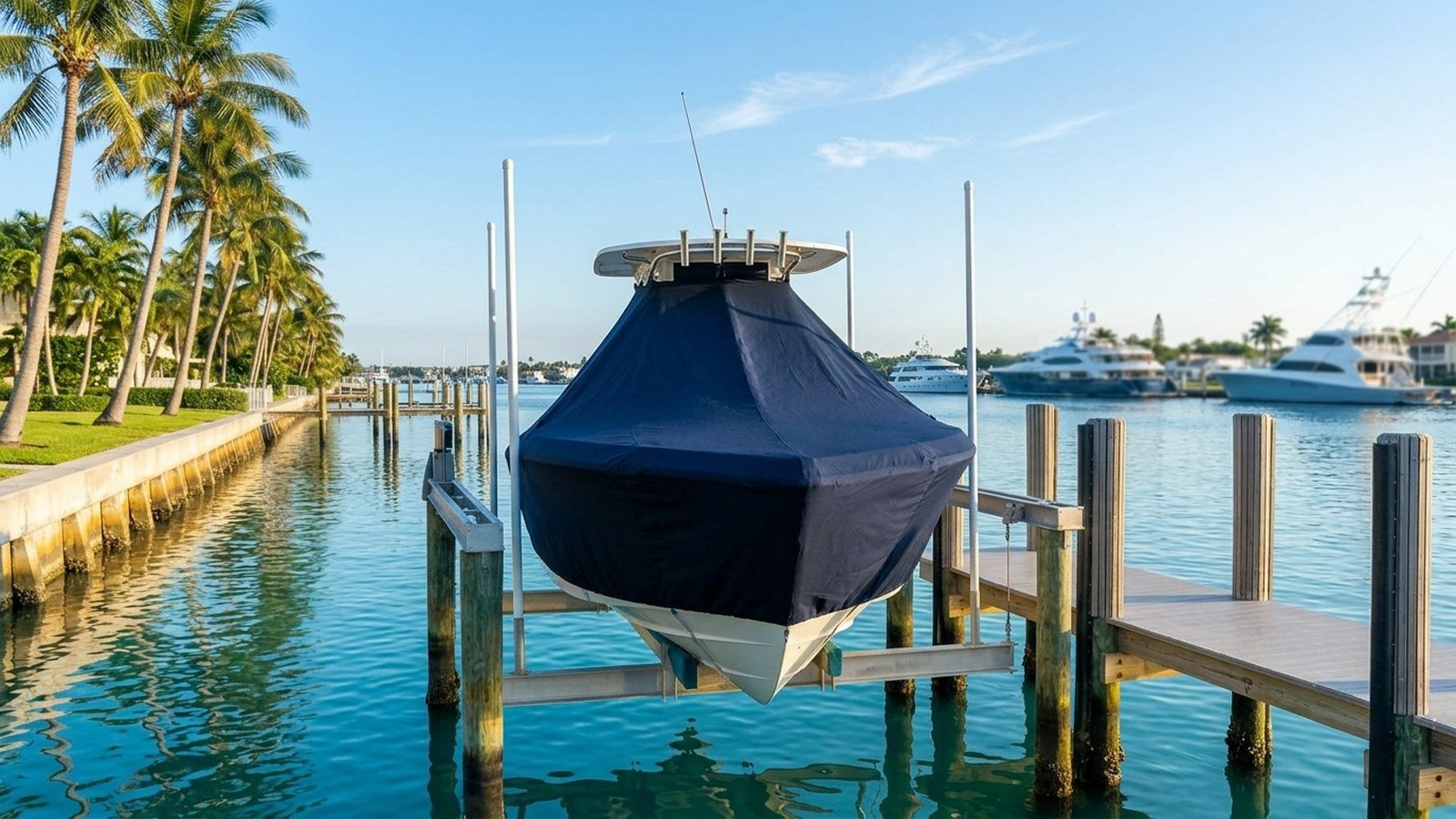
Off-Season & Winter Boat Storage Guide
How to put your boat away the right way — protect it from moisture, pests, and the elements, and have it ready to launch in spring.
Clean and dry the boat, handle the engine/fuel/battery per your manufacturer’s guidance, keep the interior ventilated against mildew, and put on a supported, breathable cover so water and snow shed off instead of pooling. Use the printable checklist below.
Why off-season storage matters
Months of sitting is hard on a boat. Cold and damp let mold and mildew take hold inside; trapped water can freeze and crack things; rodents and insects move into a sheltered, unused boat; and even winter sun keeps oxidizing the gelcoat. A little prep now prevents expensive surprises at launch.
Where to store your boat
Indoor (heated or dry)
Best protection from weather and UV. Still cover or drape the boat to keep dust and pests off.
Outdoor, covered (lift roof / carport)
A roof helps with rain and snow, but wind-blown dust, pollen, birds, and side sun still reach the boat — use a cover too.
Outdoor, uncovered
The most exposed. A quality fitted cover (or shrink-wrap) is essential here, with proper support so snow and water shed.
Cover vs. shrink-wrap
Shrink-wrap is a one-season throwaway. A reusable custom cover protects year after year and is breathable — just make sure it’s supported for snow load.
The cover’s role: shed water and snow
A cover only helps in storage if water and snow run off it. Set up a support pole or peak so the cover tents and sheds; in heavy-snow regions add a support frame so the weight can’t pool and collapse the cover. Keep vents open so interior moisture escapes and the cover doesn’t balloon, and secure the edges with tie-down straps (and sandbags on a lift or dry stack) so winter wind can’t lift it.
Winterization & storage checklist
Print this and check it off as you go. Mechanical steps — follow your engine/boat manufacturer’s guidance or a marine mechanic.
- Wash & dry the hull, deck, and interior; remove all dirt and salt.
- Clear out gear — electronics, cushions, life jackets, food — and store them dry indoors.
- Engine & fuel: stabilize fuel, fog/winterize the engine, and change oil/lower-unit lube per the manufacturer or a mechanic.
- Drain water from systems that can freeze (bilge, livewells, plumbing); make sure nothing holds standing water.
- Battery: disconnect and store charged, in a dry place (a maintainer helps).
- Interior: prop up seats/lockers for airflow; add moisture absorbers; leave compartments cracked to prevent mildew.
- Pest-proof: close gaps; avoid leaving anything that attracts rodents.
- Support the cover: install a pole/peak (or frame for snow) so water and snow shed off.
- Cover & secure: fit the cover, open the vents, and strap/weight it down against wind.
- Check periodically through the season for pooling, snow load, or shifting.
Spring recommissioning (quick version)
Reverse the list: reconnect and test the battery, inspect fuel lines and belts, check the engine per the manual, reinstall electronics, and wash the boat. Clean and dry the cover before storing it for the season — see Clean & Care.
Frequently asked questions
Do I need to cover my boat if it’s stored indoors?
Indoor storage protects from weather, but a cover or drape still keeps dust, debris, and pests off. Outdoors, a supported cover is essential.
Will a regular cover handle snow?
Only if it’s supported so snow slides off. In heavy-snow areas add a support frame; an unsupported cover can pool and collapse under snow weight.
Cover or shrink-wrap for winter?
Shrink-wrap is a single-season, disposable option. A reusable custom cover protects year after year and is breathable — just support it for snow and secure it against wind.
Should I leave the cover vents open?
Yes. Vents let interior moisture escape, which prevents mildew and stops the cover from ballooning in the wind.
Keep reading
Store it right with a cover made for your boat.
Find your model and we’ll custom-pattern a breathable, weather-ready cover.