
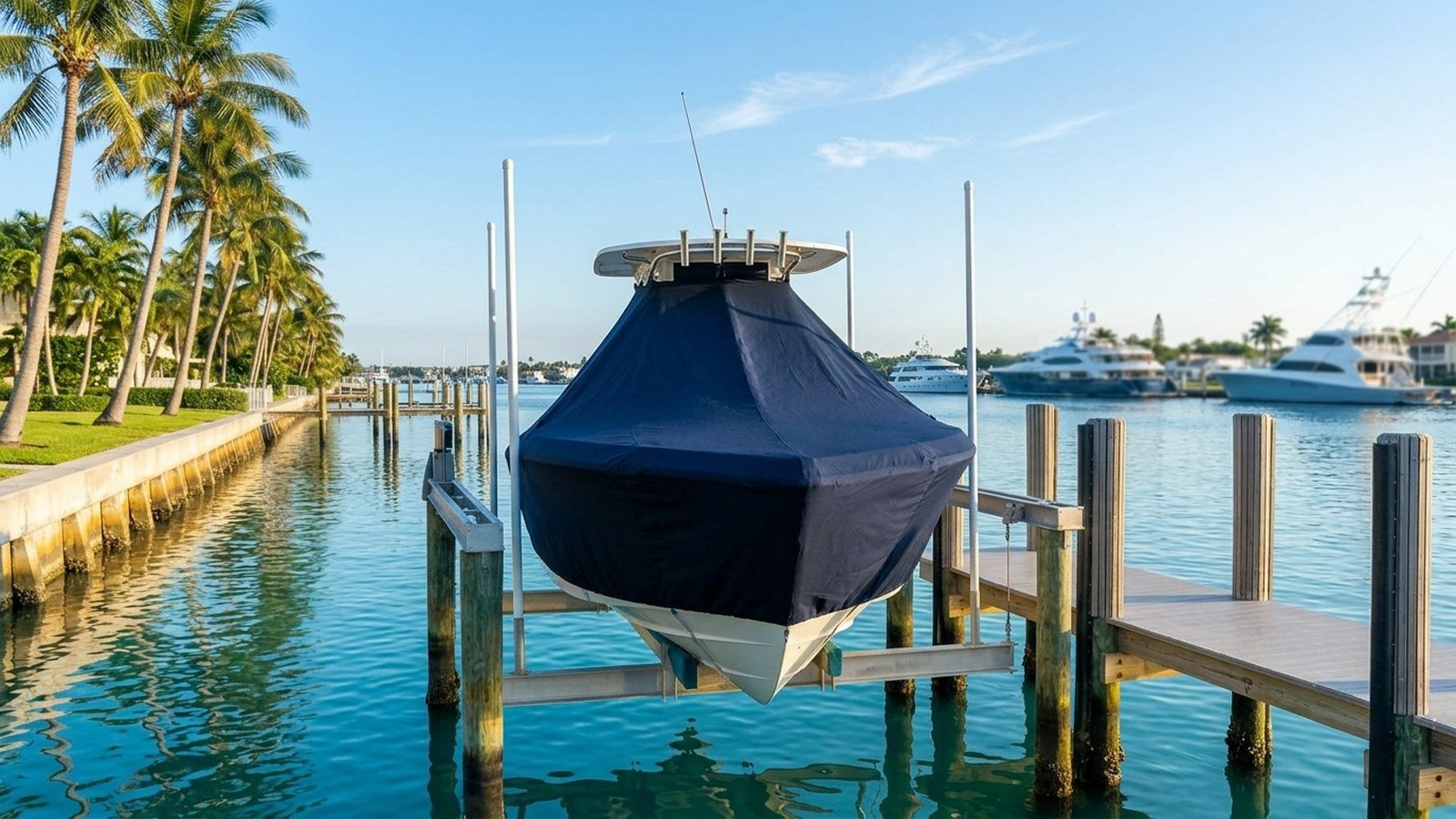
Why Cover Your Boat? The Real Damage a Cover Prevents
Sun, rain, birds, and dust quietly age a parked boat. Here’s exactly what that costs — and a calculator to estimate it for your boat.
A parked boat is exposed 24/7. UV oxidizes the gelcoat, cracks the vinyl, and fades the upholstery; rain pools and breeds mildew; bird droppings etch the finish. None of it is dramatic on day one — it’s slow, and the repair bills (detailing, reupholstery, re-gelcoat) are not small. A custom cover is the cheapest insurance against all of it.
What a boat cover protects against
A good cover is cheap insurance against the slow, expensive damage the sun and weather do to a parked boat. The big ones:
UV & gelcoat oxidation
Sunlight oxidizes gelcoat into that chalky, faded look and breaks down the shine. Left long enough it needs compounding or, in bad cases, re-gelcoating. Keeping the sun off is the single biggest thing a cover does.
Cracked vinyl & faded seats
UV and heat dry out vinyl seating until it cracks, and they fade upholstery, trim, and dash electronics. Reupholstering a console boat is a four-figure job; a cover prevents it.
Rain, pooling & mildew
Rain fills the cockpit and bilge, and trapped moisture grows mold and mildew on seats and carpet. A breathable, supported cover sheds water and lets interior moisture escape.
Birds, sap, dust & pests
Bird droppings are acidic and etch gelcoat; tree sap and pollen stain; leaves clog drains; and rodents and insects love an open, sheltered boat. A snug cover keeps it all out.
It also protects something you don’t see until you sell: resale value. A boat with bright gelcoat and crack-free seats shows better and holds its price; an oxidized, mildewed one gets marked down hard.
Cost-of-not-covering calculator
Estimate the typical added upkeep and repair cost of leaving your boat uncovered. Based on published industry cost ranges — an estimate, not a quote.
Is a boat cover worth it?
For almost any boat stored outdoors or trailered, yes. The math is lopsided: a single reupholstery job or gelcoat restoration costs many times what a custom cover does, and that’s before counting the hours of extra washing and detailing an uncovered boat needs. A cover doesn’t just save money — it saves your weekends.
| Neglect leads to… | Typical cost (industry ranges) |
|---|---|
| Extra detailing / oxidation removal | ~$15–$40 per foot, per visit |
| Reupholstering cracked, faded seats | ~$1,000–$4,000+ |
| Re-gelcoat / restore oxidized hull | ~$6,000–$10,000 |
| A custom-fit cover | A fraction of the above — one time |
Get the protection right
The protection only works if the cover actually fits and is supported so water sheds. Start with the Buyer’s Guide to pick the right cover, choose a fabric in the Fabric Guide, and if your model isn’t listed, see How to Measure.
Frequently asked questions
Is it really worth covering my boat?
For a boat stored outside or trailered, almost always. The repair costs a cover prevents — reupholstery, gelcoat restoration, constant detailing — dwarf the one-time cost of a custom cover.
Does a cover stop mold and mildew?
A breathable, well-fitting, supported cover dramatically reduces it by shedding rain and letting interior moisture escape. A sealed, non-breathable cover with no airflow can actually trap moisture and make mildew worse.
Will a cover protect my boat in a hurricane?
No. Covers are for everyday sun, rain, and dirt during storage. For severe storms, hail, or flooding, haul the boat out or follow a proper storm plan.
My boat is on a lift under a roof — do I still need one?
A roof helps with rain but not wind-blown dust, pollen, birds, or pests, and side sun still reaches the boat. A cover finishes the job; many lift owners use a lighter cover for exactly this.
Keep reading
Protect your investment for a fraction of the repair bill.
Find your boat and we’ll custom-pattern a cover to your exact model.