Boat Cover Order Guide

Perfect Fit · Boat Cover Order Guide

Every Question on Your Order, Explained

Most companies ask two questions and mail you a universal cover. We ask about twenty — your top, your rails, your motors, how you store it, even your aftermarket add-ons — because that’s the only way a cover fits your boat instead of “a boat your size.” Here’s what every question means, and why it changes the cover.

Custom-Made to Order Made in the USA Up to 6-Year Fabric Warranty
Hit a term on the order form you don’t recognize — coffin box, aft support bars, jack plate, sea pen? This is the page that explains it. Every question below removes a guess, so the pattern we cut matches your exact boat.

1 · Your boat’s layout

The overall deck and cabin layout changes how the fabric drapes and where it seals — a cover cut for one style won’t sit right on another.
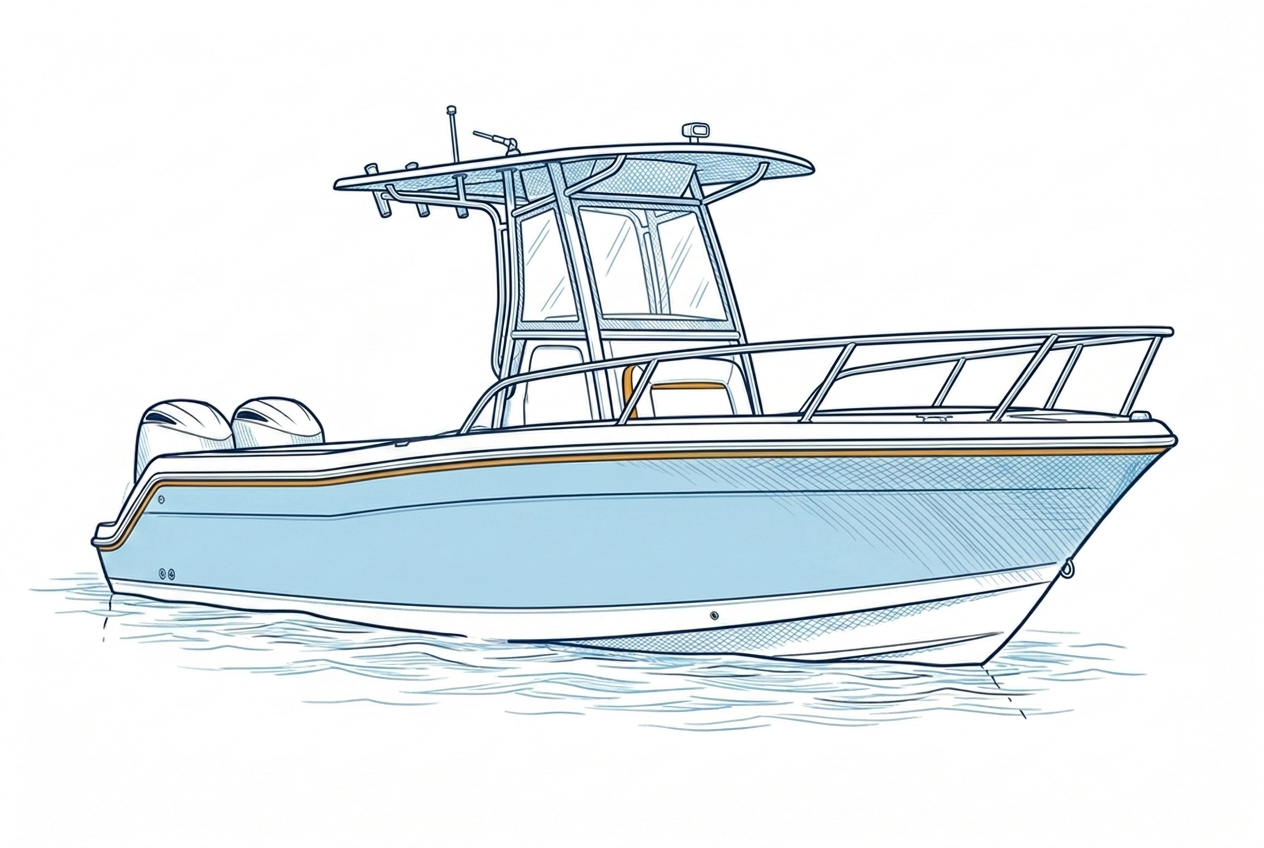
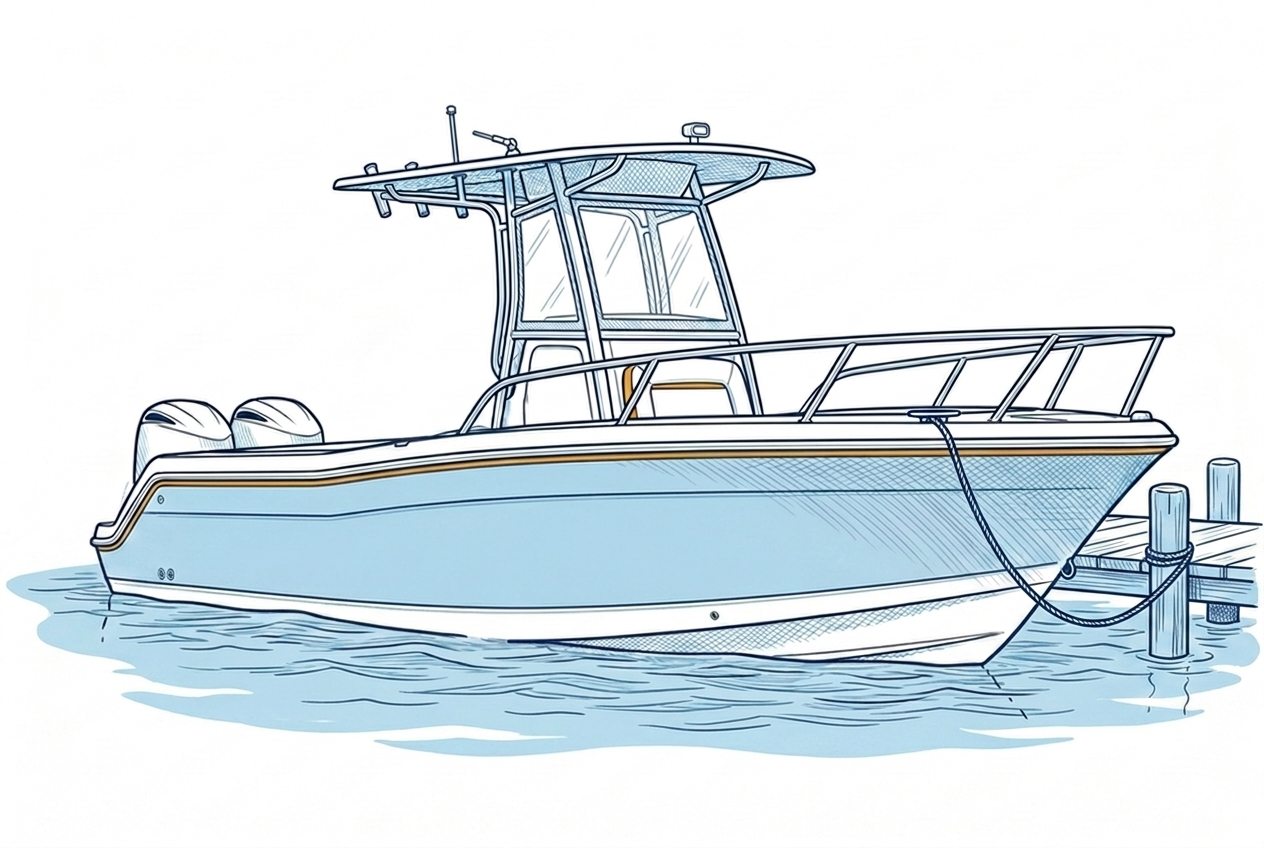
Center console boat illustration

Center console

on form: Center Console
What
A single console in the middle you can walk all the way around.
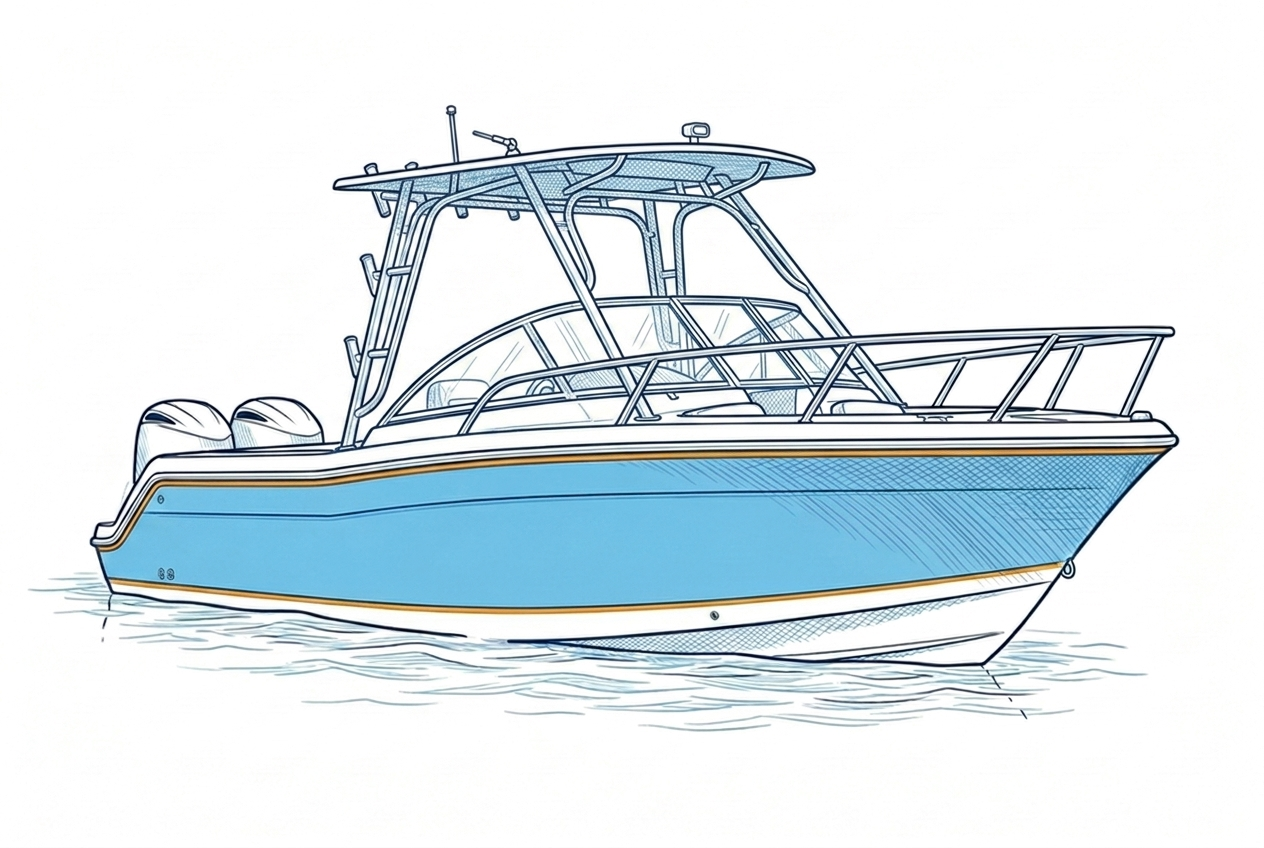
Dual console boat illustration

Dual console

on form: Dual Console
What
Two consoles — helm and passenger — with a walk-through windshield between them.
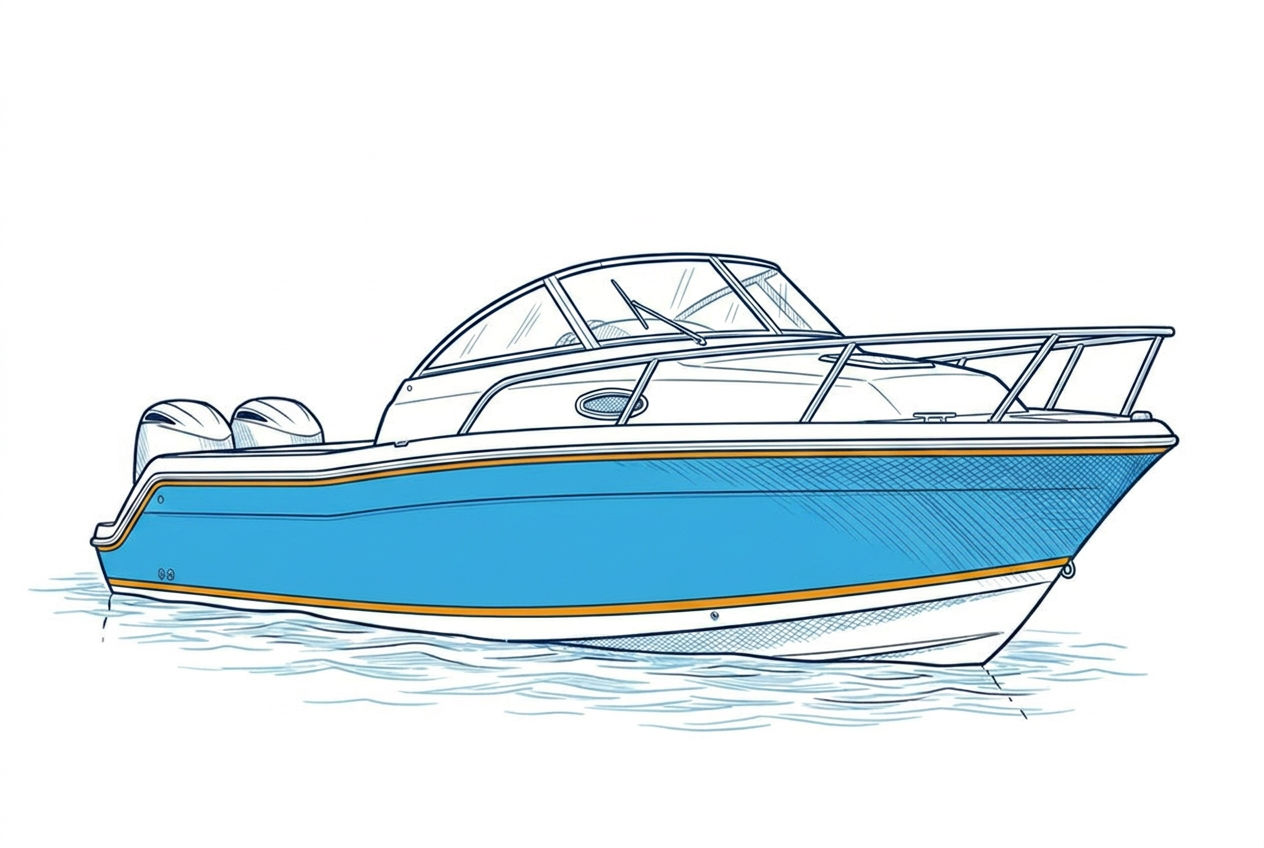
Walkaround cabin boat illustration

Walkaround

on form: Walkaround
What
A small raised cabin at the bow with side decks you can walk around.
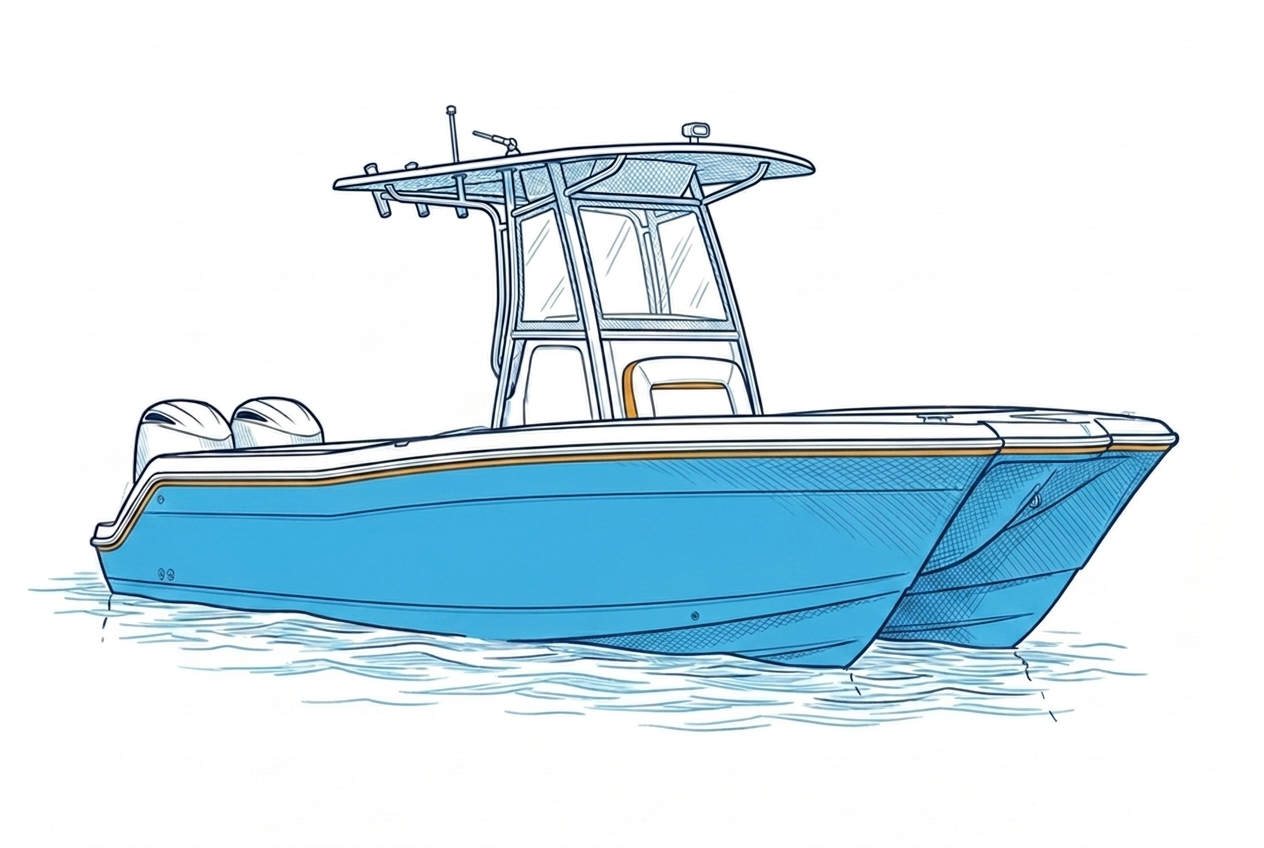
Power catamaran center console boat illustration

Catamaran

on form: Catamaran
What
A twin-hull boat with a tunnel between the hulls — a completely different footprint.

2 · Your top (the single biggest factor)

Your top is the #1 reason a length-only cover fails. The cover has to be cut around the exact top you have — its height, its footprint, and whether it’s rigid or folds down.
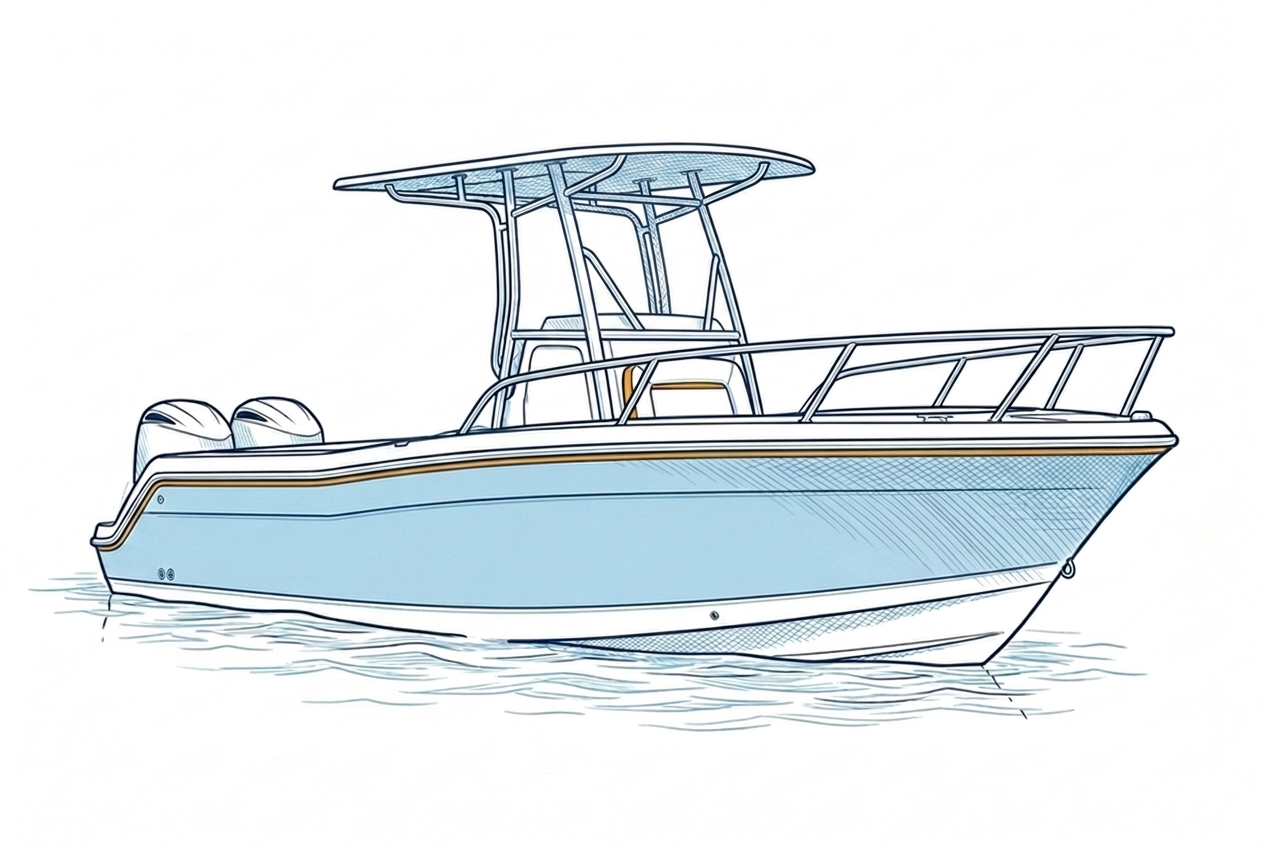
Center console boat with a hard T-top

Hard T-top

on form: Hard Top
What
A rigid fiberglass hardtop on a frame over the console.
Why
Cut to clear the top’s exact height and footprint.
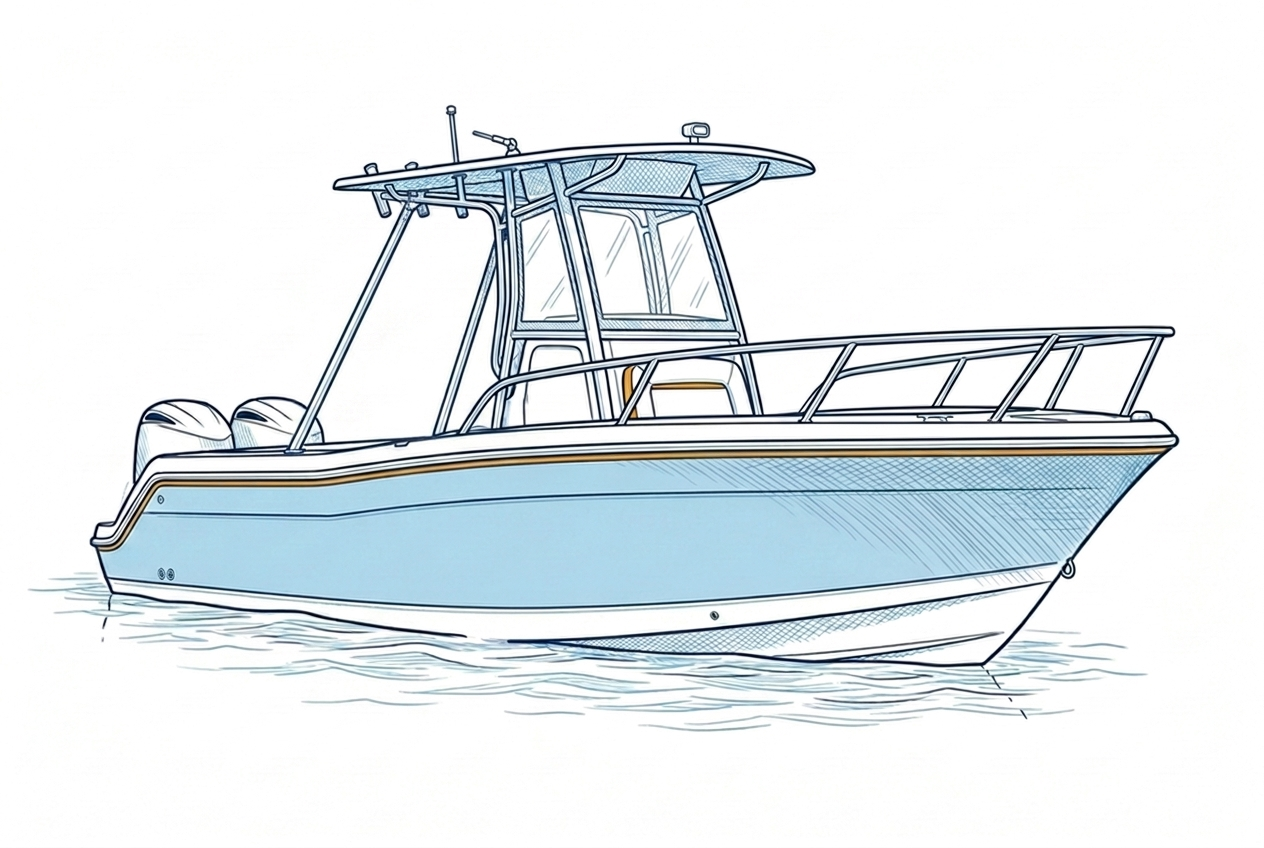
Boat T-top with aft support bars

Hard top w/ aft support bars

on form: Hard Top with Aft Support Bars
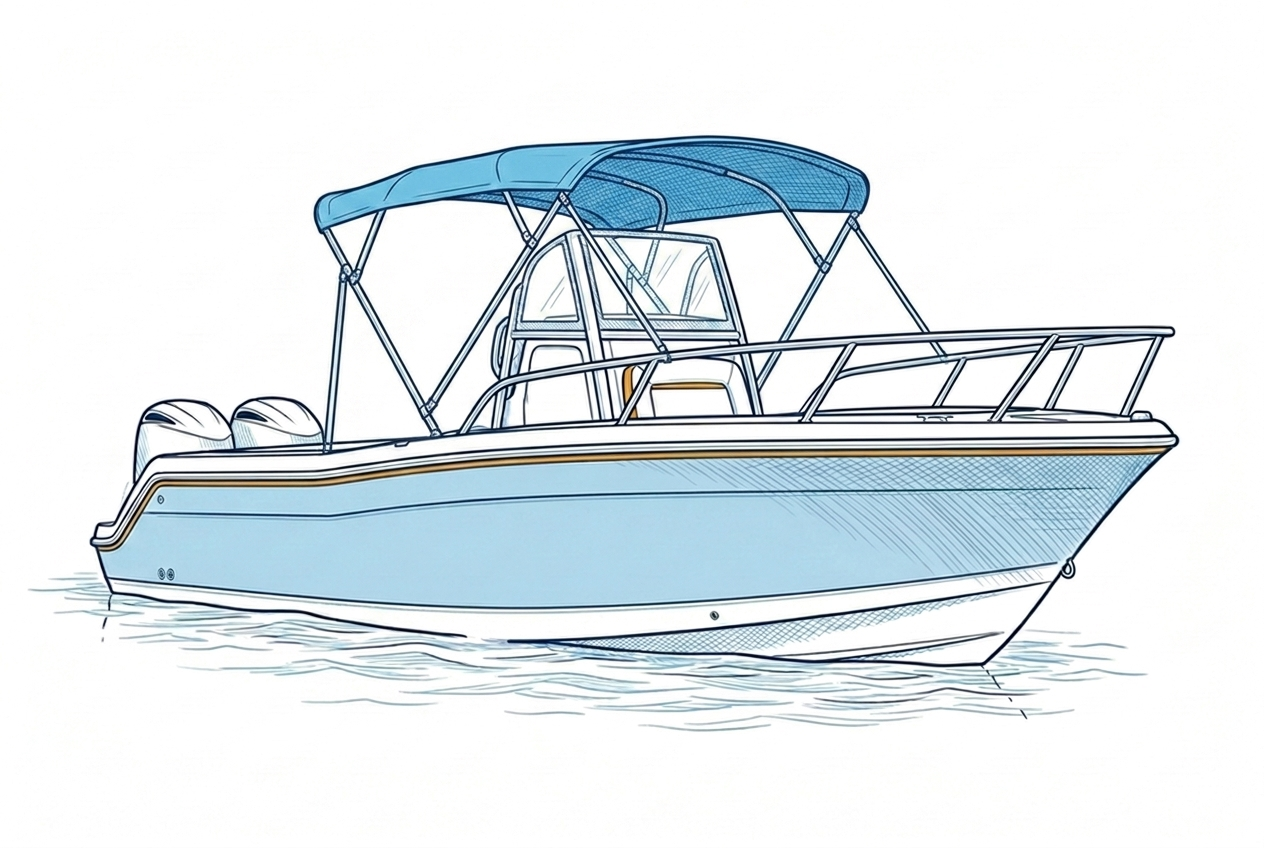
What
The same hardtop plus two poles bracing the back of the top to the aft deck.
Why
Those bars add structure at the rear the cover must go around.
Boat with a soft canvas Bimini top

Canvas / Bimini top

on form: Canvas Top
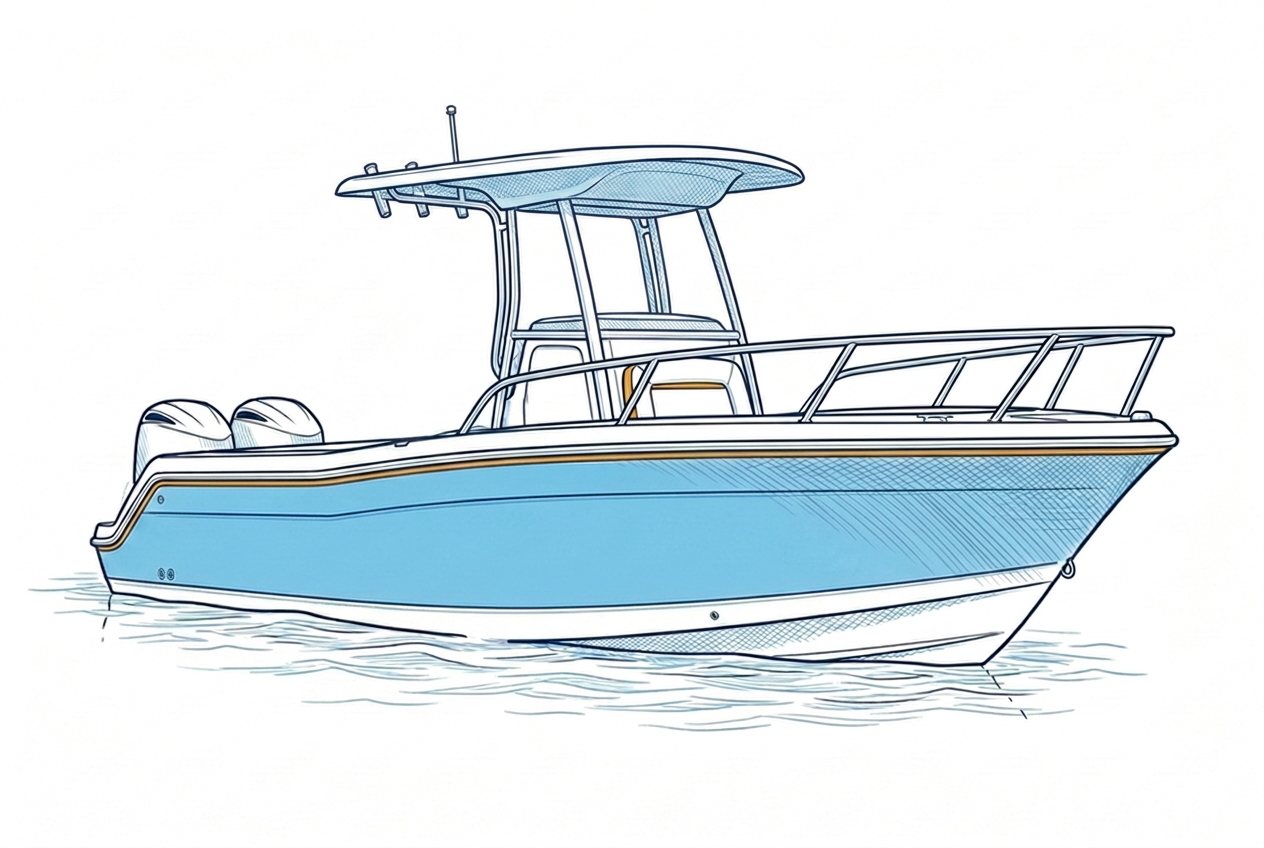
What
A folding fabric top on a tubular frame — not rigid fiberglass.
Why
Patterned for the soft top’s shape (up or folded down).
Boat with a Key West style low-profile hardtop

Key West style top

on form: Key West Style Top
What
A compact, low-profile molded fiberglass hardtop — shorter and lower than a full offshore T-top.

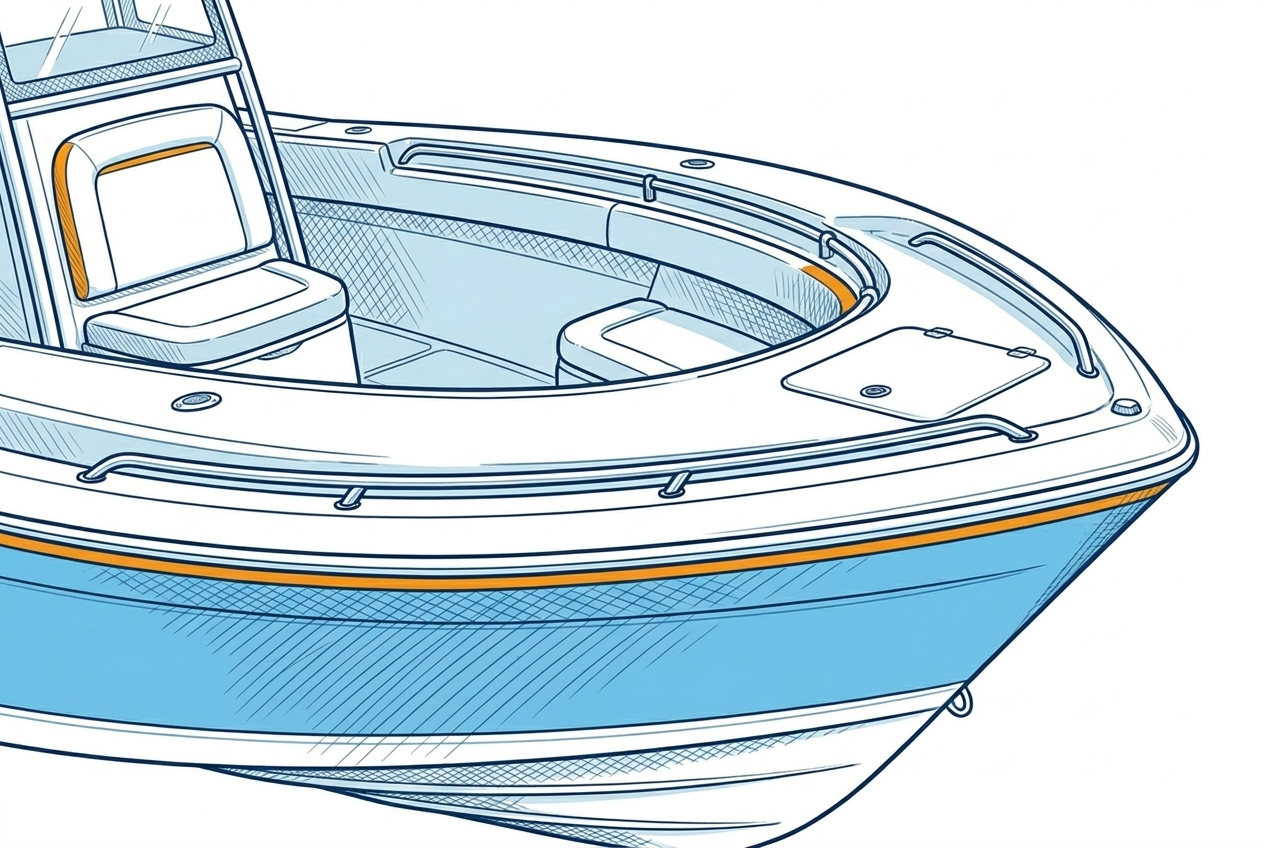
3 · Bow rails

A rail raises the profile at the bow. We add height and shaping so the cover drapes over it and still seals — a flat cover leaves the sides exposed.
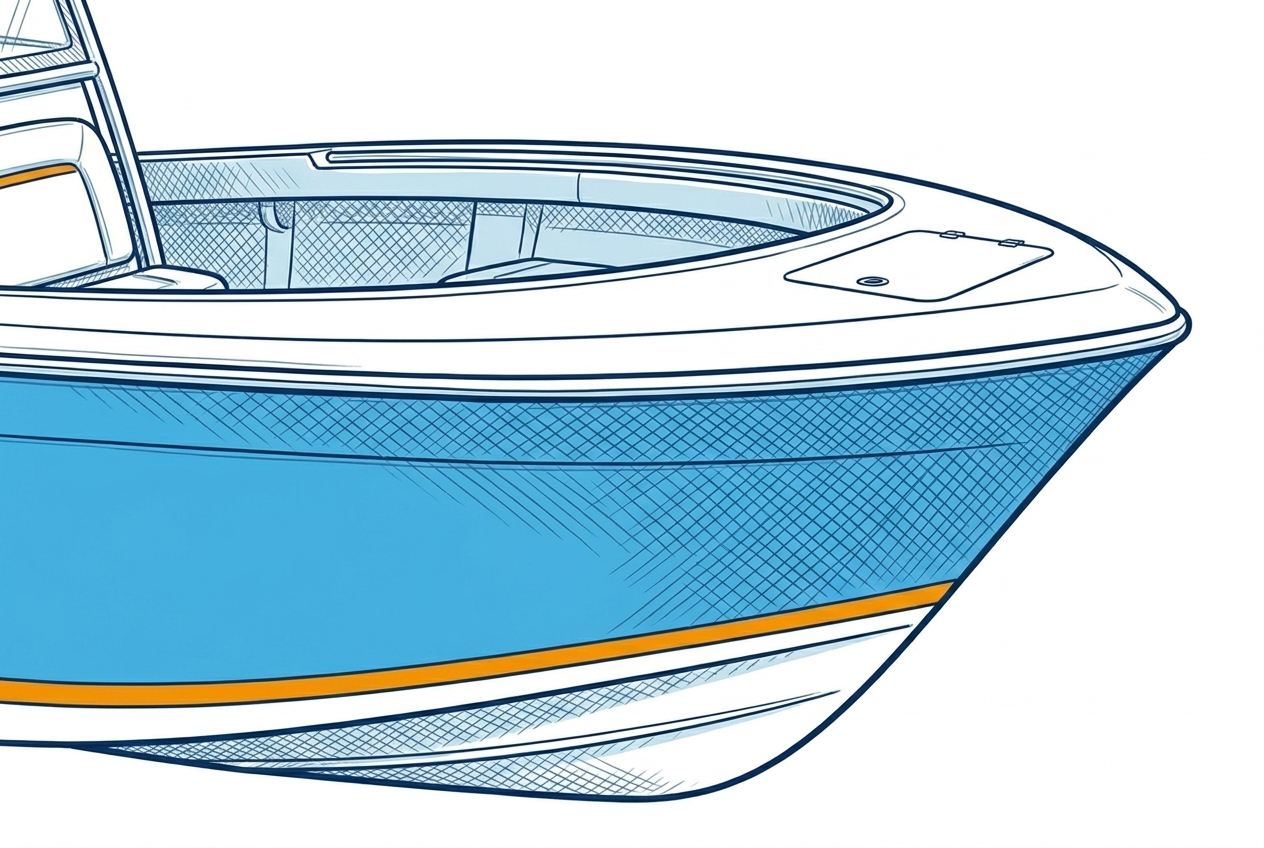
Boat bow with no bow rail

No rails

on form: No Rails
What
A clean, bare gunwale with no railing.
Boat bow with a recessed bow rail

Recessed

on form: Recessed
What
A low rail set almost flush with the deck edge.
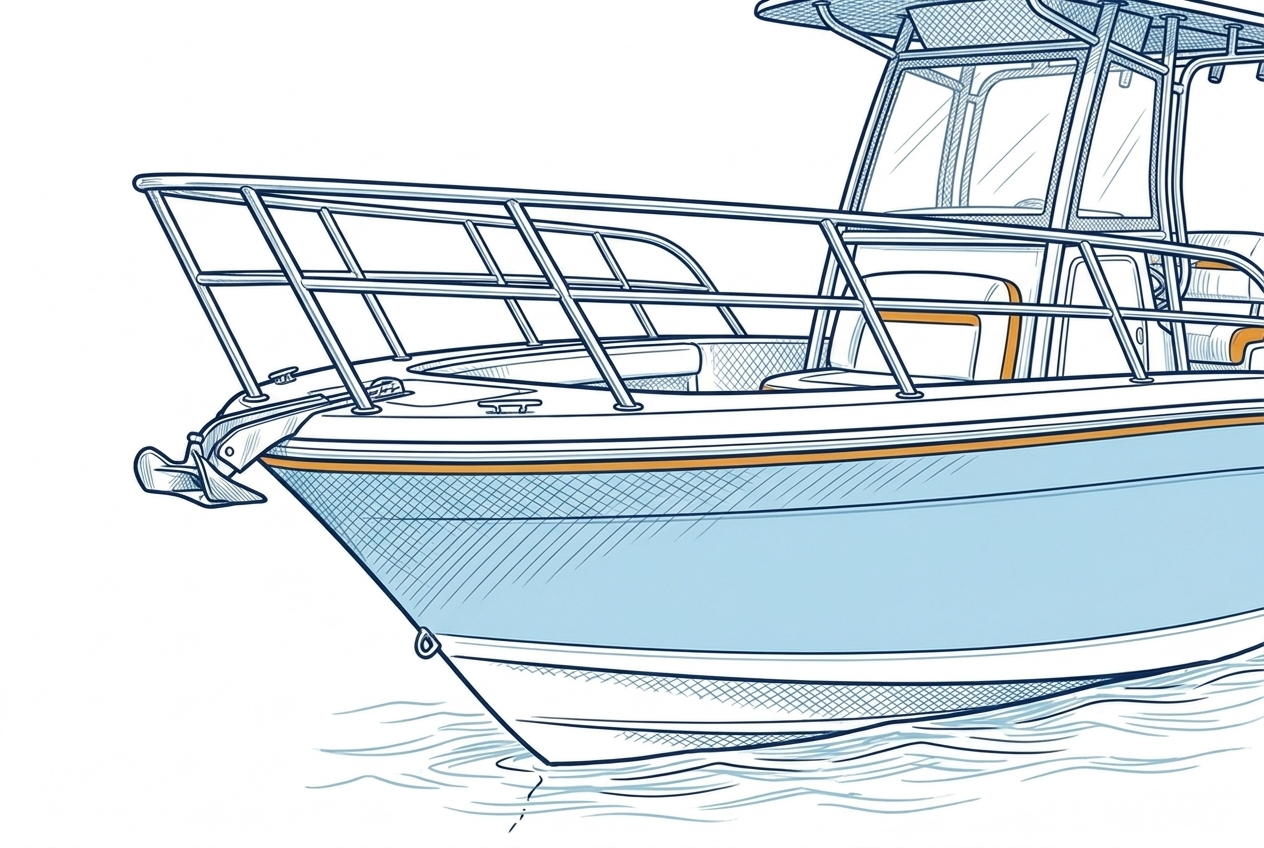
Boat bow with a standard stainless bow rail

Standard rail — Low or High

on form: Low – 8" or less / High – 9" or more
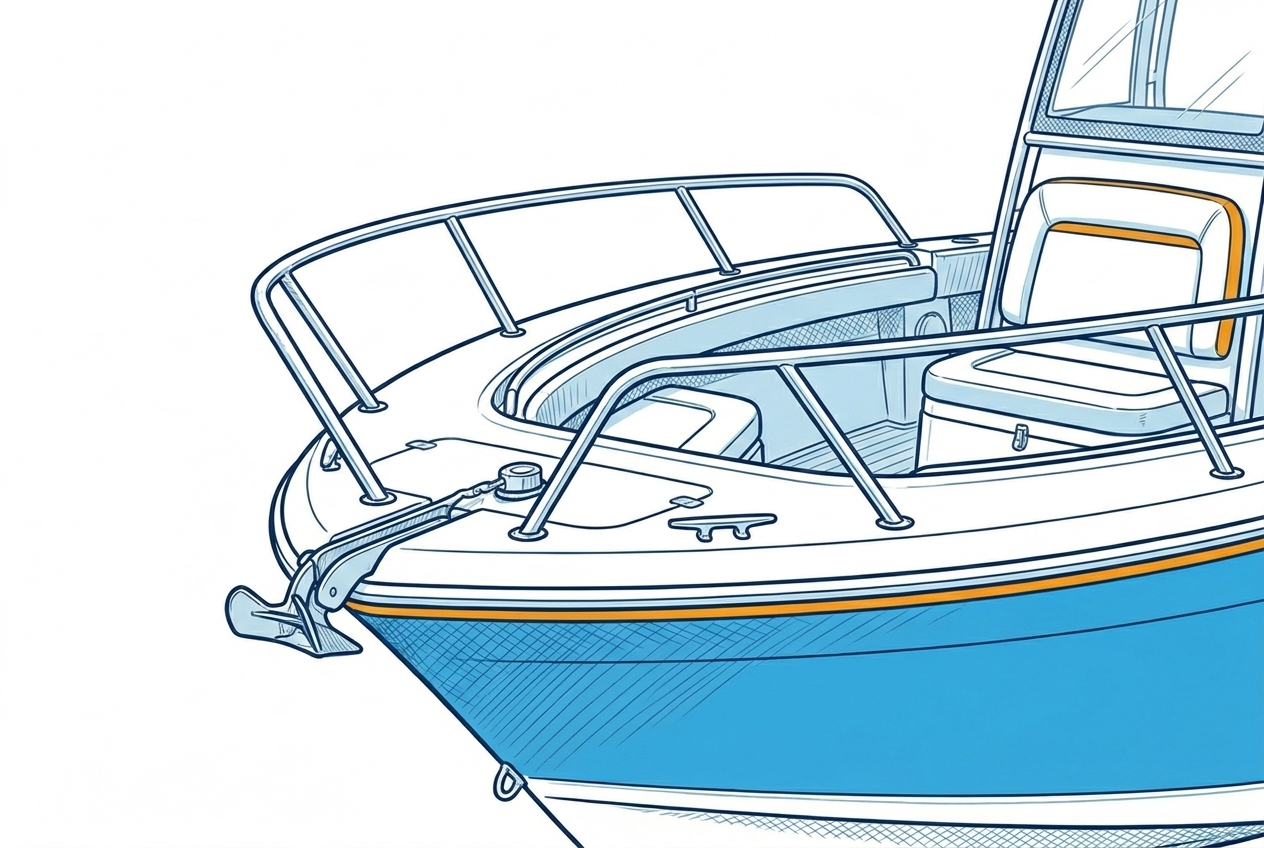
What
A stainless tube rail around the bow.
Measure yours: 8″ or less = Low, 9″ or more = High. That inch matters, so measure rather than eyeball.
Boat bow with a walkthrough bow rail

Walkthrough

on form: Walkthrough
What
Side rails with an open gap at the front-center for a walk-through.

4 · Bow accessories

Anything that sticks out past or above the bow is a point a generic cover tears or pools around. We note it so the pattern clears it.
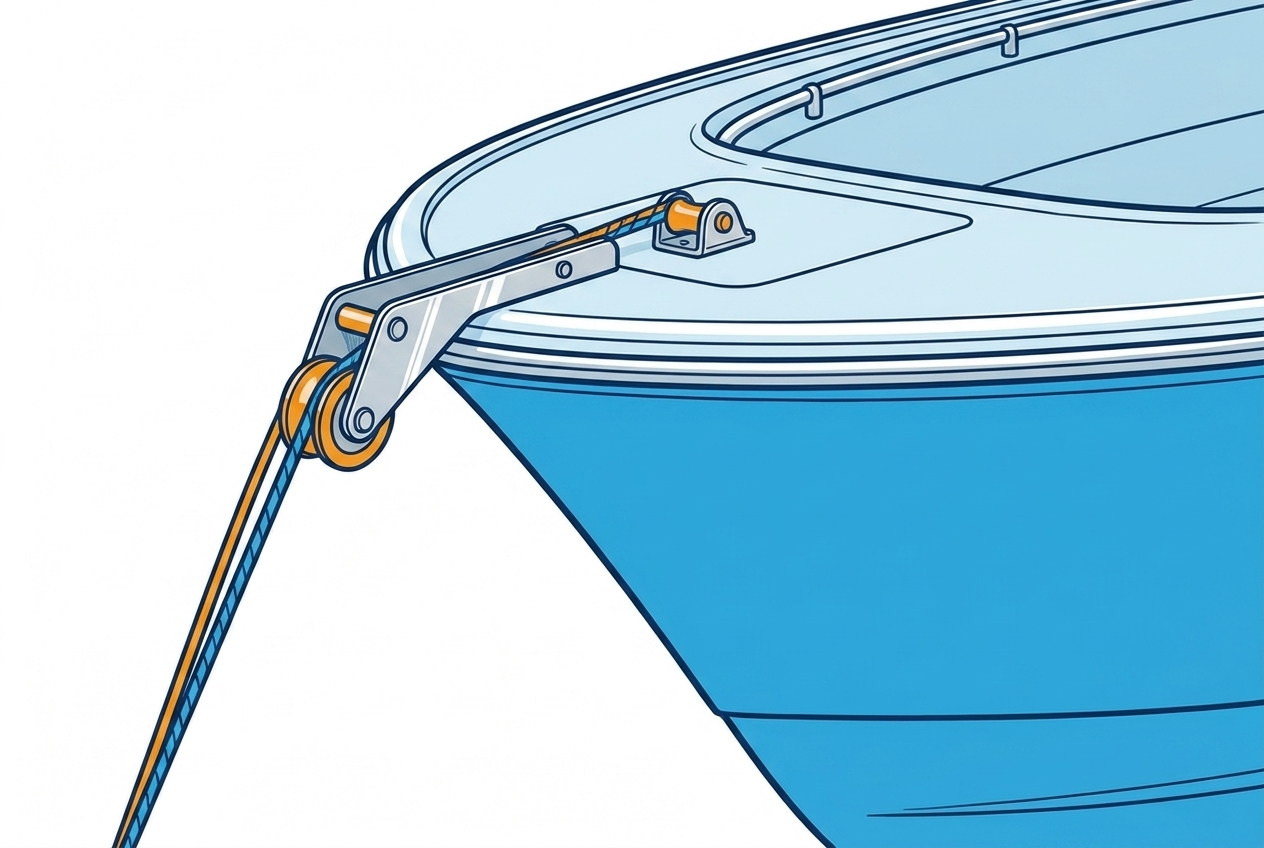
Boat bow roller

Bow roller

on form: Bow Roller
What
A small stainless roller at the bow tip the anchor line rolls over.
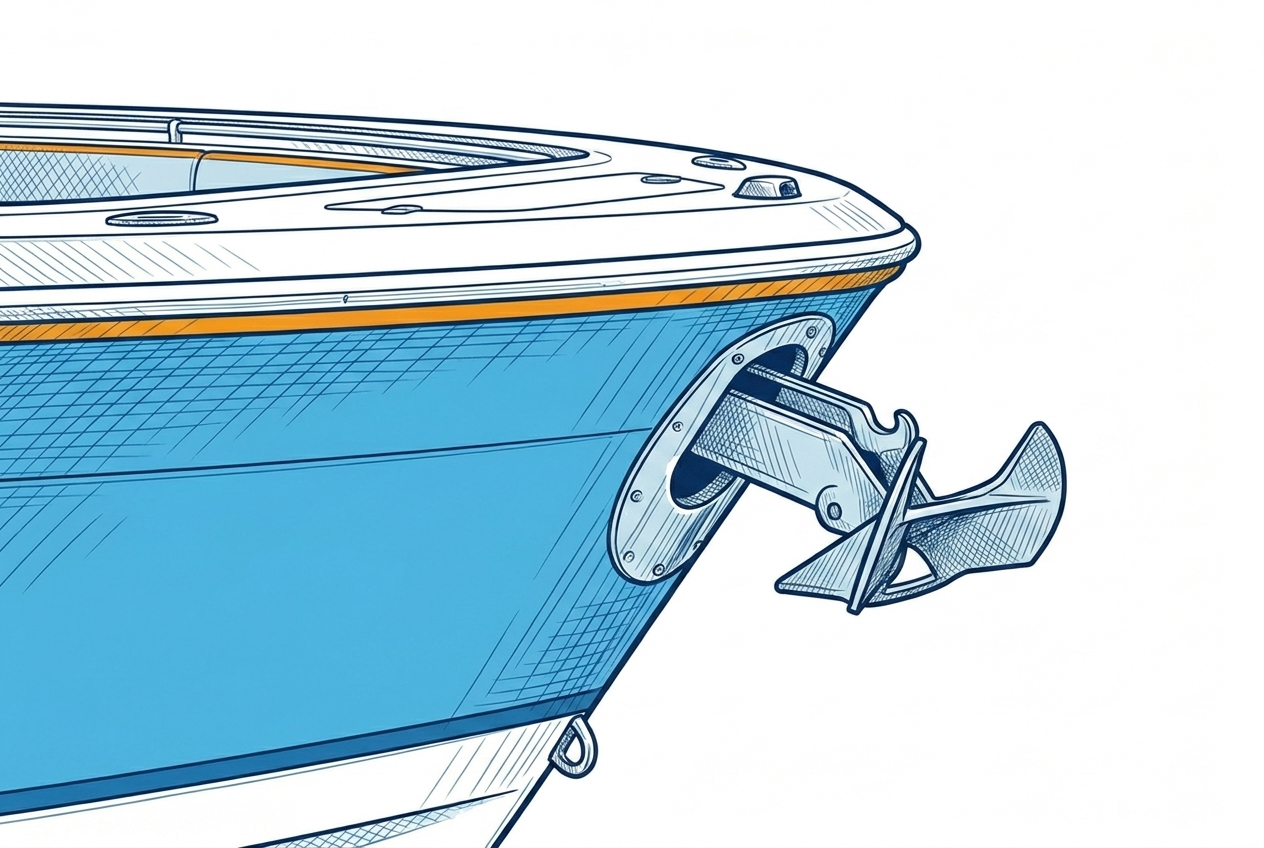
Boat thru-hull anchor at the bow

Thru-hull anchor

on form: Thru Hull Anchor
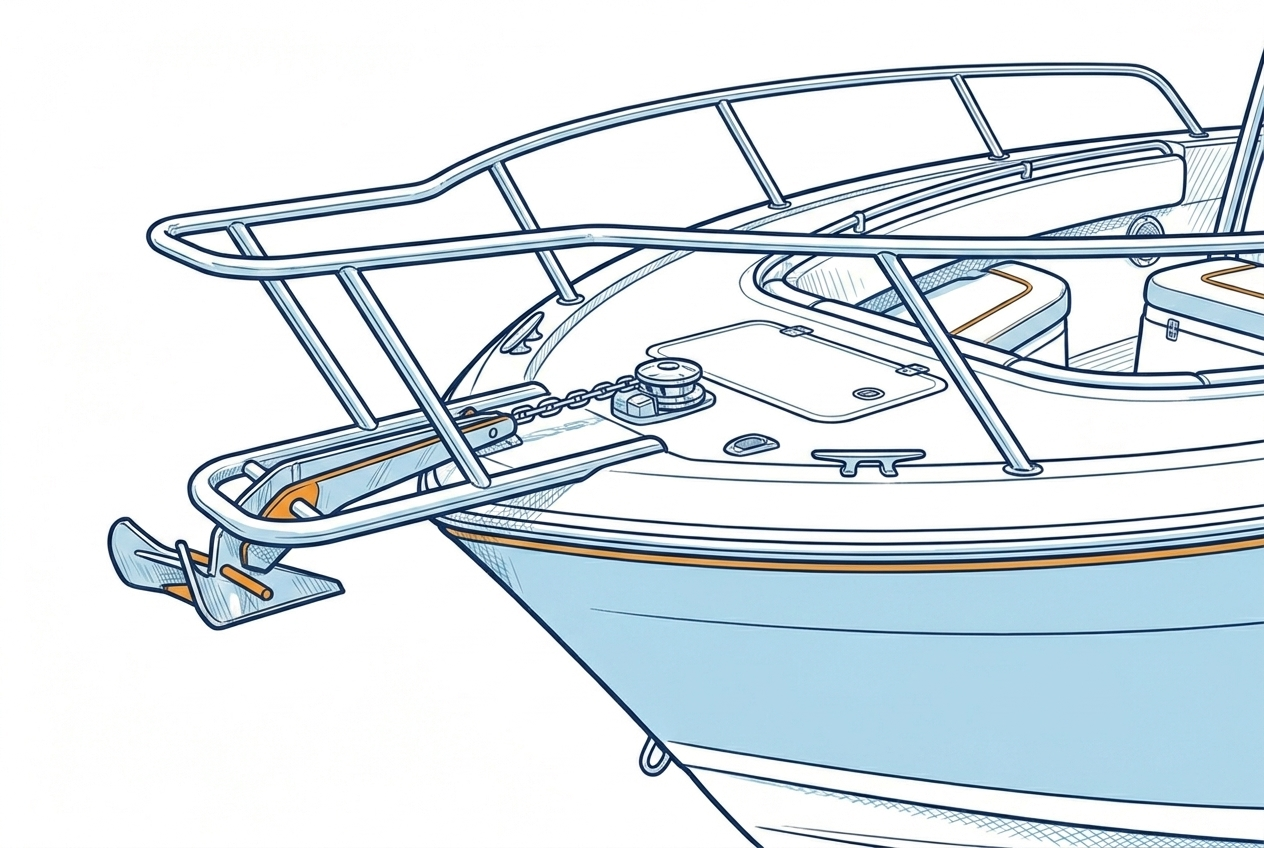
What
An anchor stored through a tube in the bow, flukes protruding out the front.
Boat bow pulpit

Bow pulpit

on form: Bow Pulpit
What
A platform extending forward past the bow tip, usually with a roller.

5 · Motors

The number and spread of your engines sets how wide and how far back the cover wraps at the transom to fully enclose them.
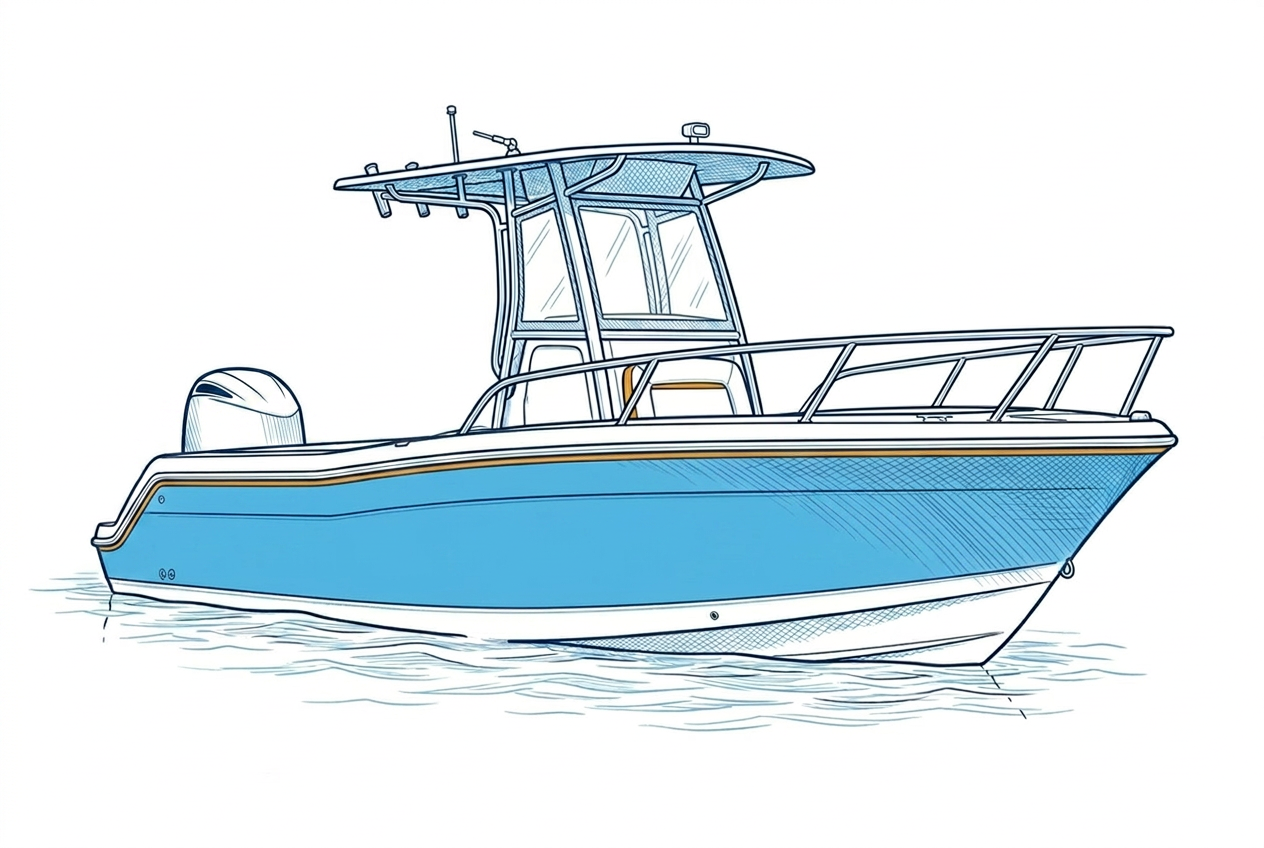
Center console boat with a single outboard motor

Single

on form: Single Engine
Center console boat with twin outboard motors

Twin

on form: Twin Engines
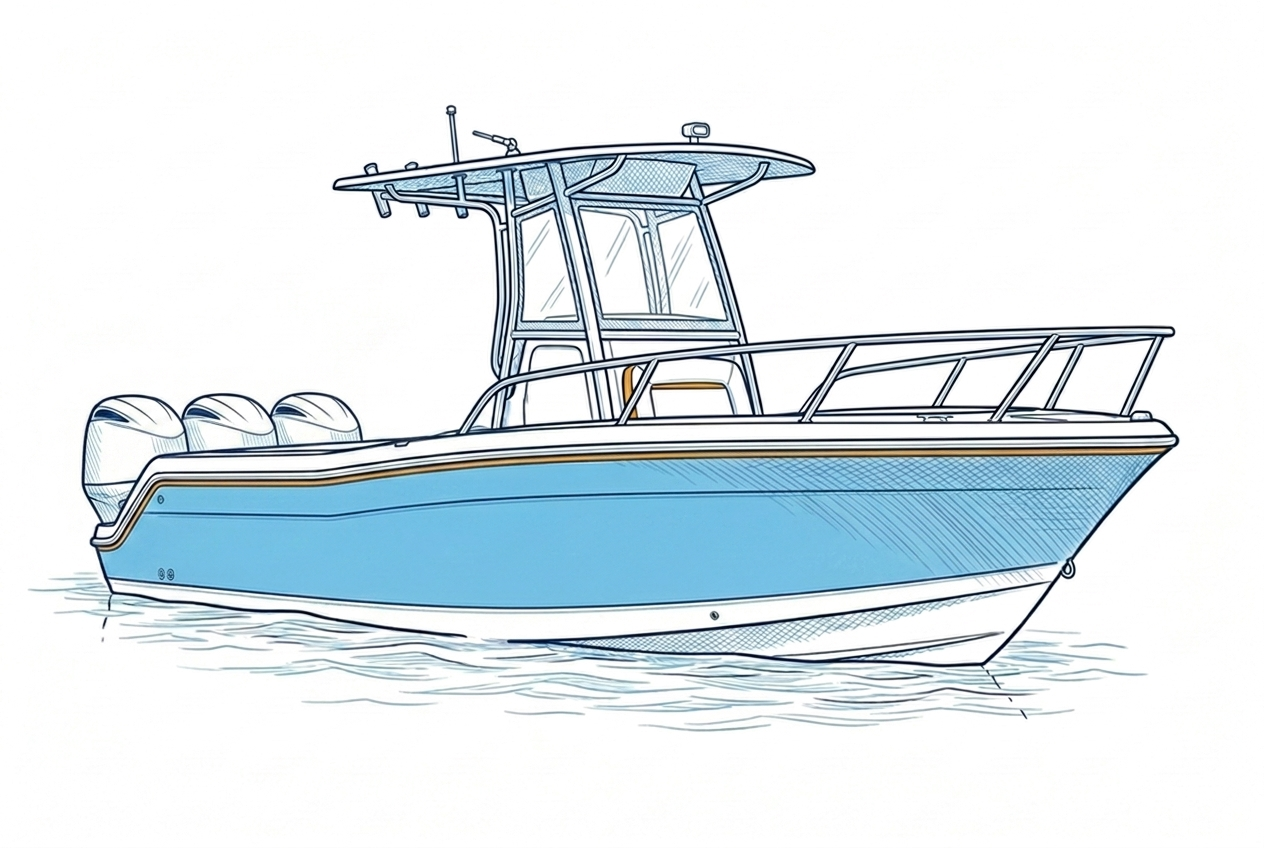
Center console boat with triple outboard motors

Triple

on form: Triple Engines
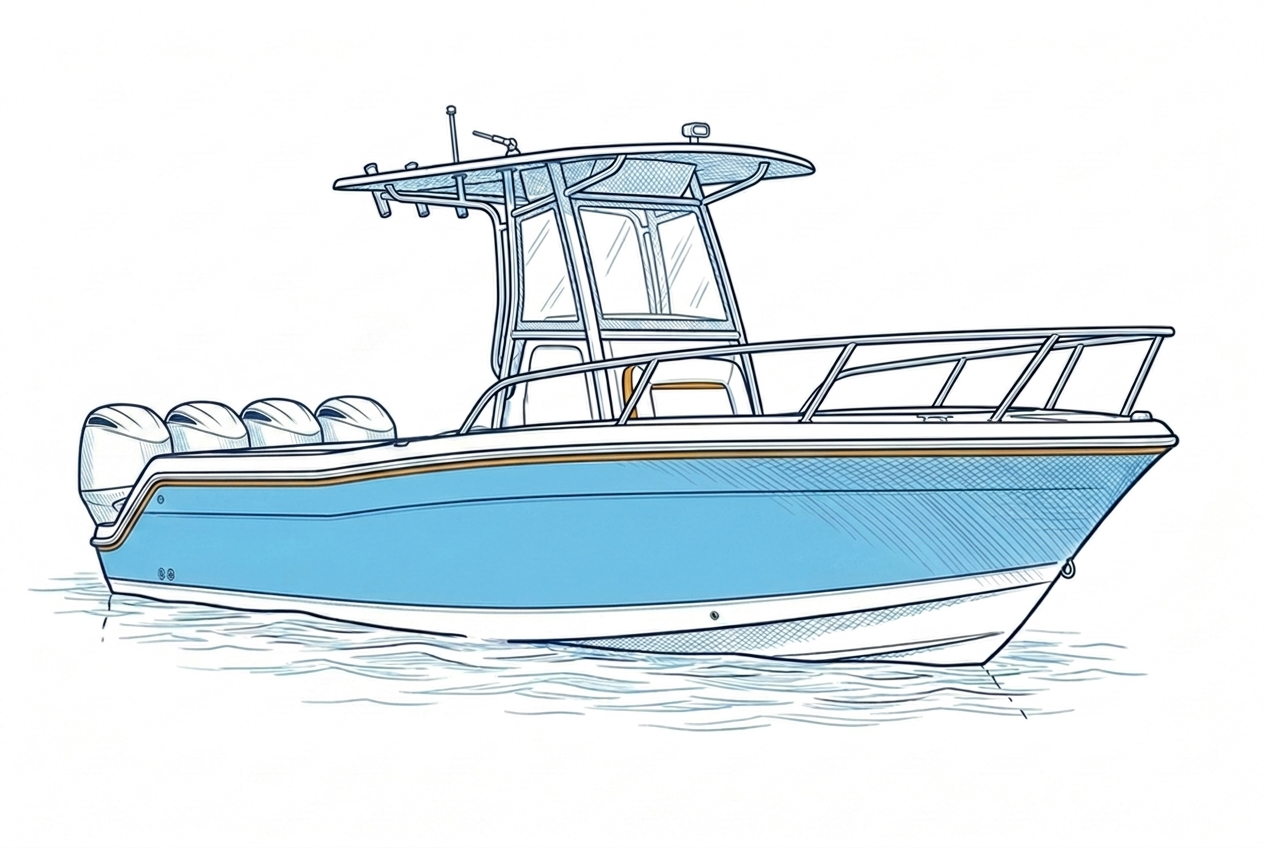
Center console boat with quad outboard motors

Quad

on form: Quadruple Engines

6 · Stern add-ons

These add hard points at the back of the boat, so the cover has to be shaped to reach and clear them.
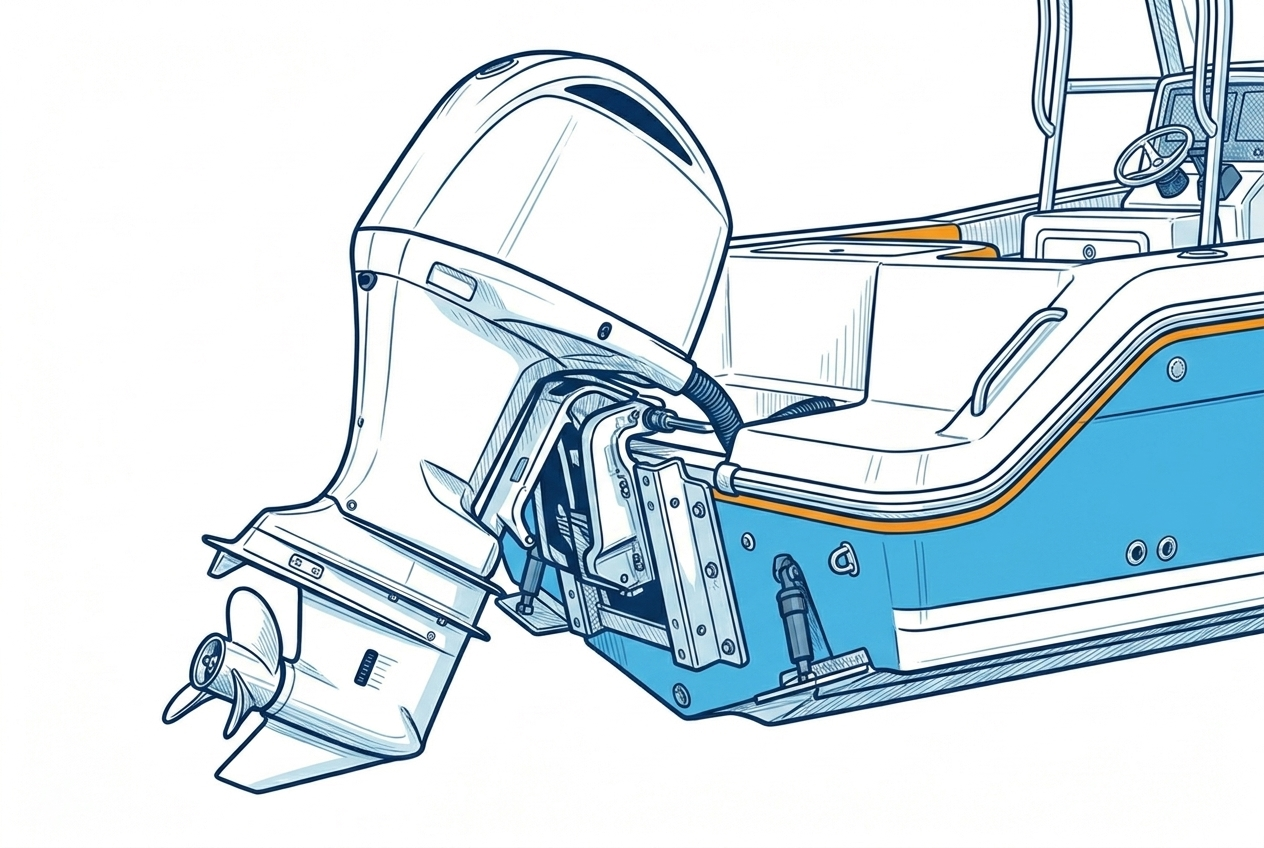
Outboard jack plate on a boat transom

Jack plate

on form: Jack Plate
What
A bracket between the transom and engine that sets the motor back and up.
Why
Pushes the engine farther aft, so the cover reaches farther back.
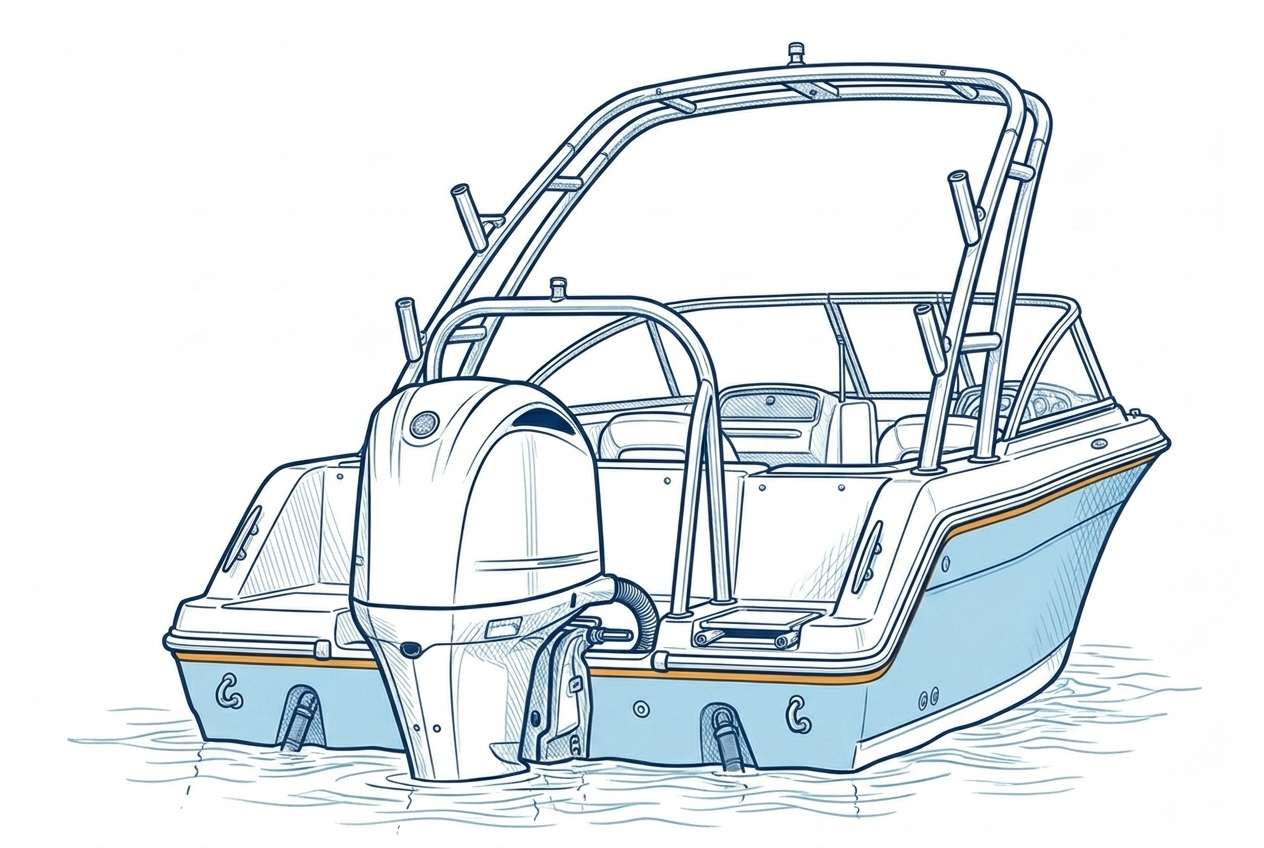
Ski tow bar arching over the outboard engine

Ski / tow bar — over engine

on form: Over the top of the engine
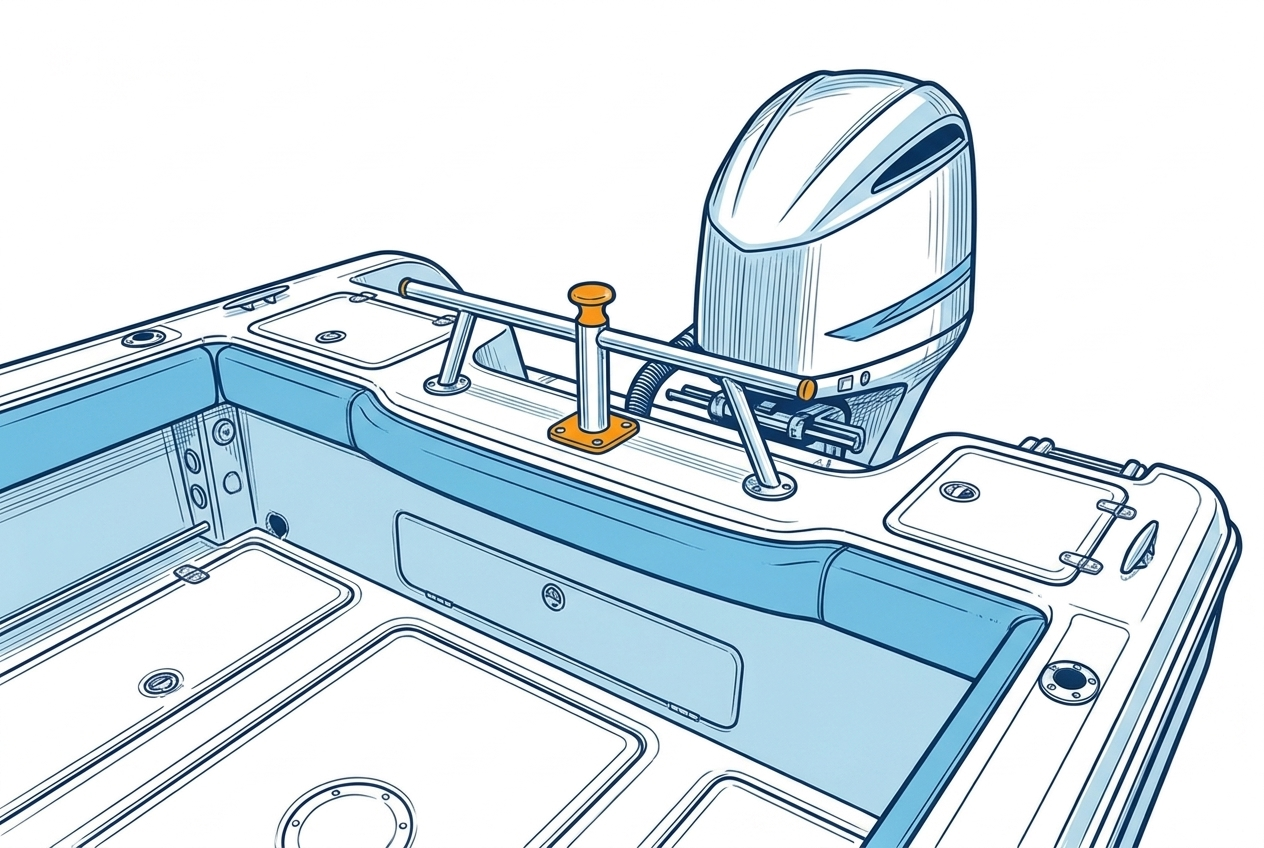
What
A tall tow arch that spans above the motor.
Ski tow pylon in front of the engine

Ski / tow bar — in front

on form: In front of the engine
What
A short tow pylon on the aft deck ahead of the motor.
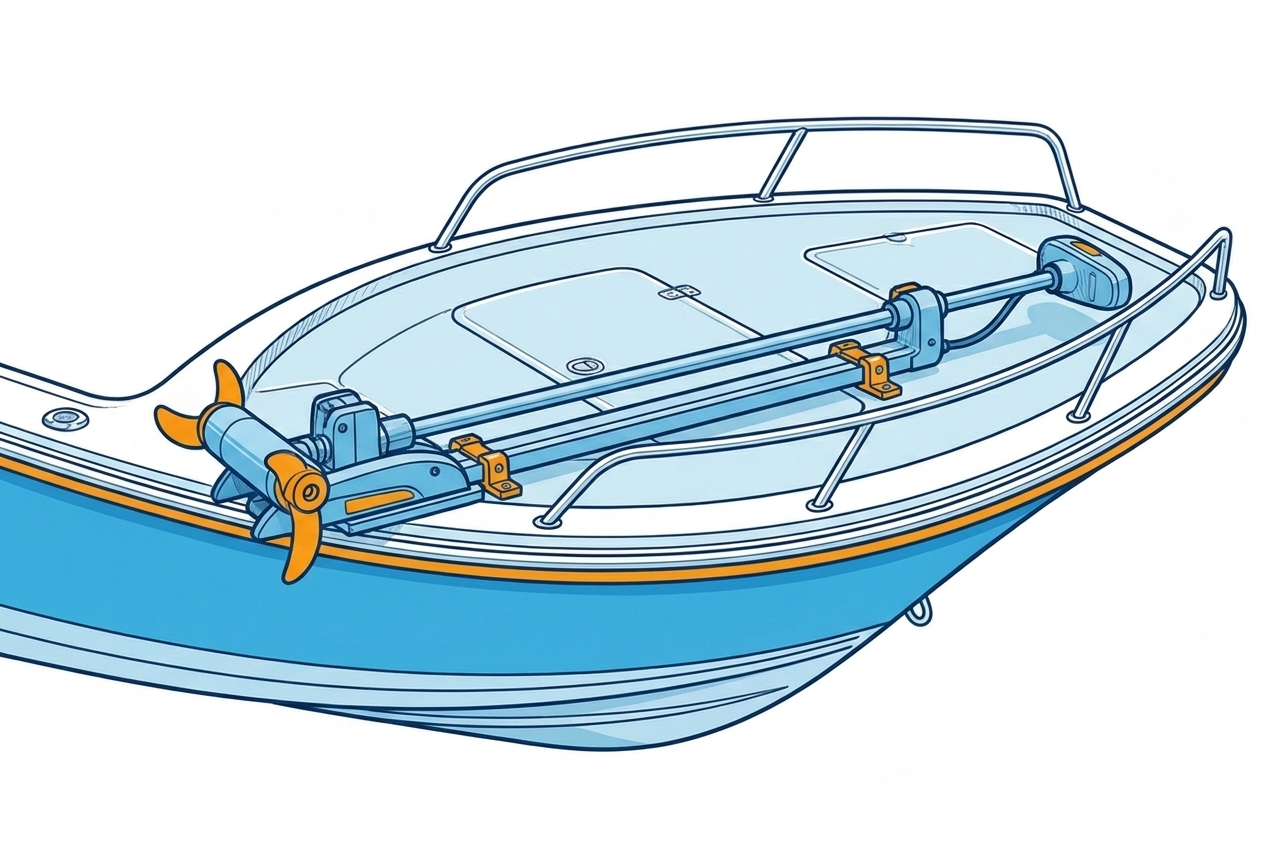
Bow-mounted trolling motor on a boat

Trolling motor

on form: Trolling Motor: Yes / Removable
What
A bow-mounted electric motor. We pattern around it — or cut cleaner if it’s removable.

7 · How you store it

Where your boat lives when it’s covered changes what the cover fights — sun, water, wind, abrasion — and how it ties down.
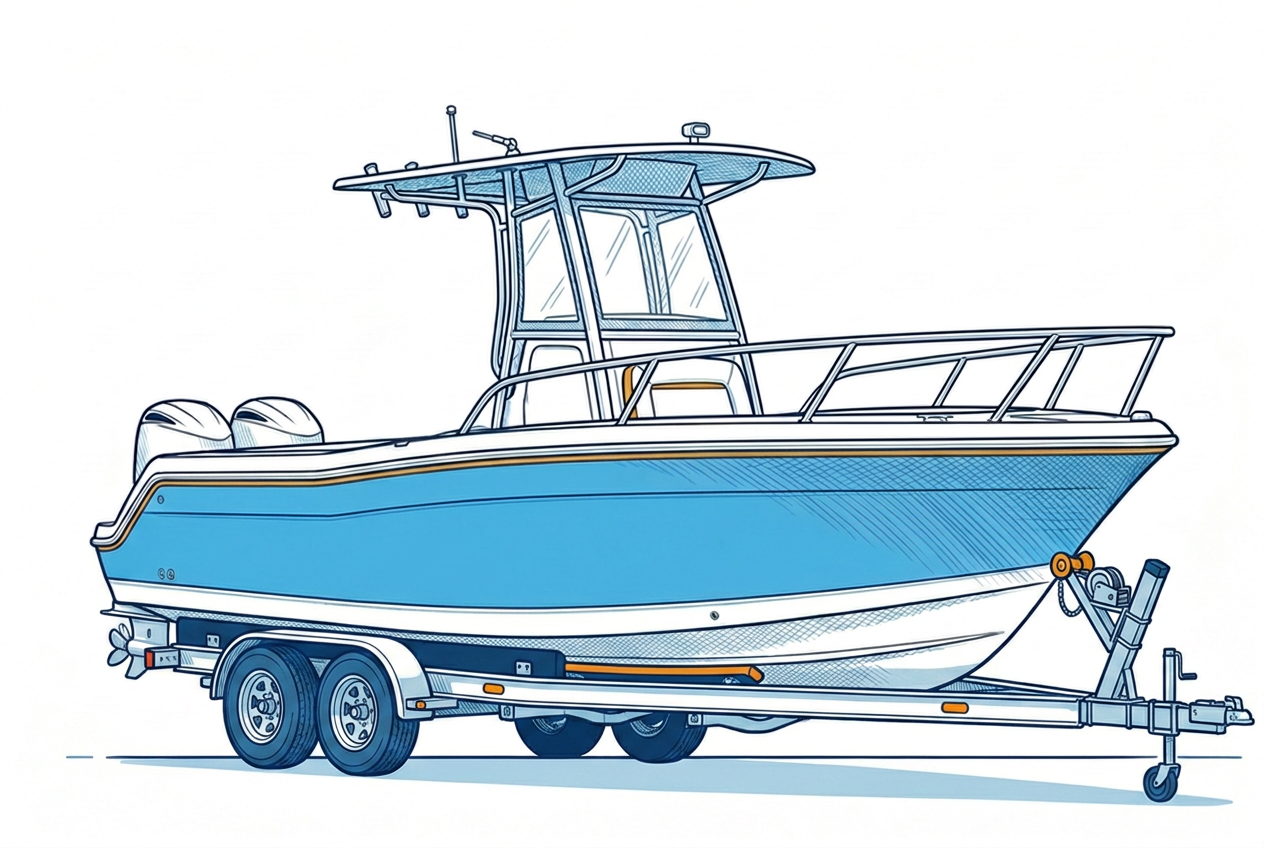
Boat stored on a trailer

Trailer

on form: Trailer
Why
Snug fit, deep skirt, secure straps — and take it off before towing at speed.
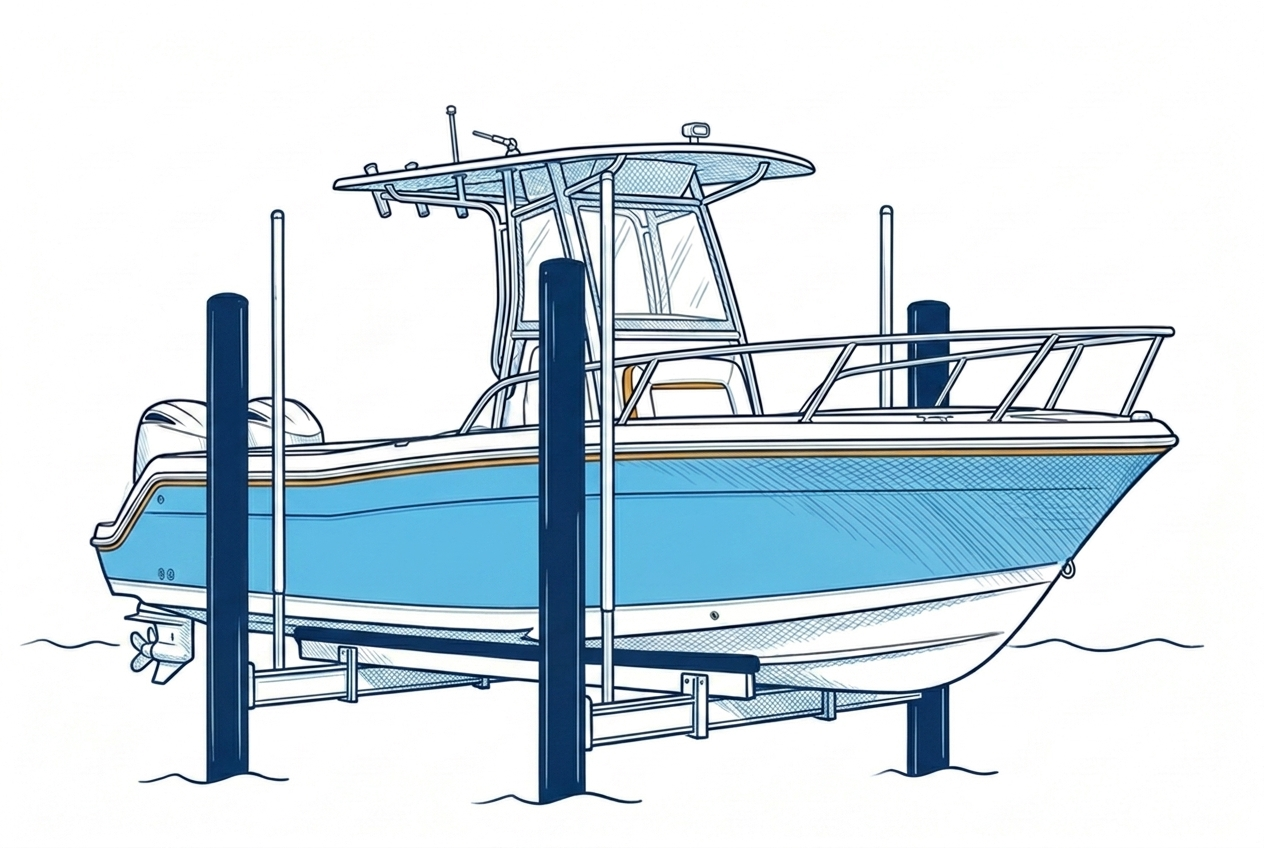
Boat raised on a boat lift

Lift

on form: Lift
Why
Bakes in the sun all season — UV resistance and a support pole to shed rain matter most.
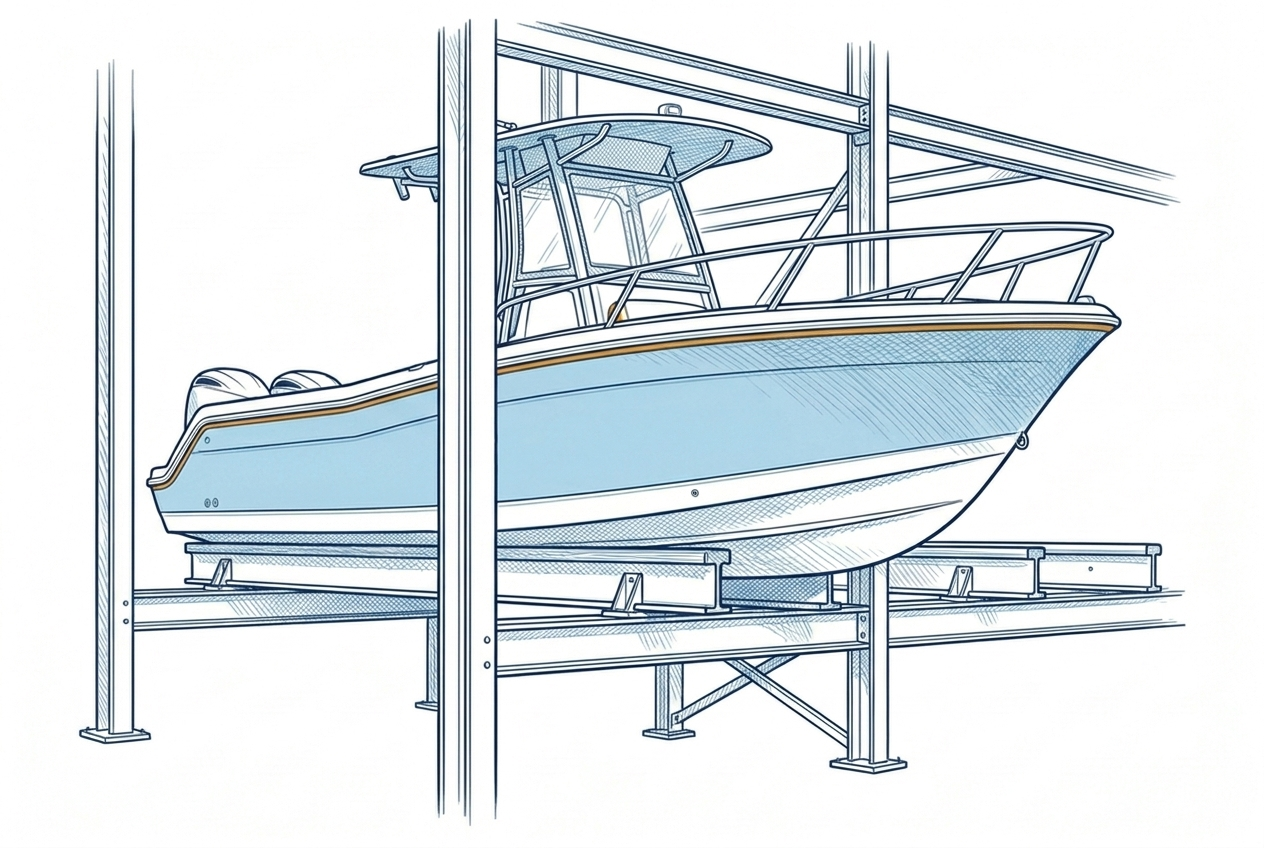
Boat in dry stack rack storage

Dry stack

on form: Dry Stack
Why
Mostly fights dust and scuffs — a lighter, breathable cover is plenty.
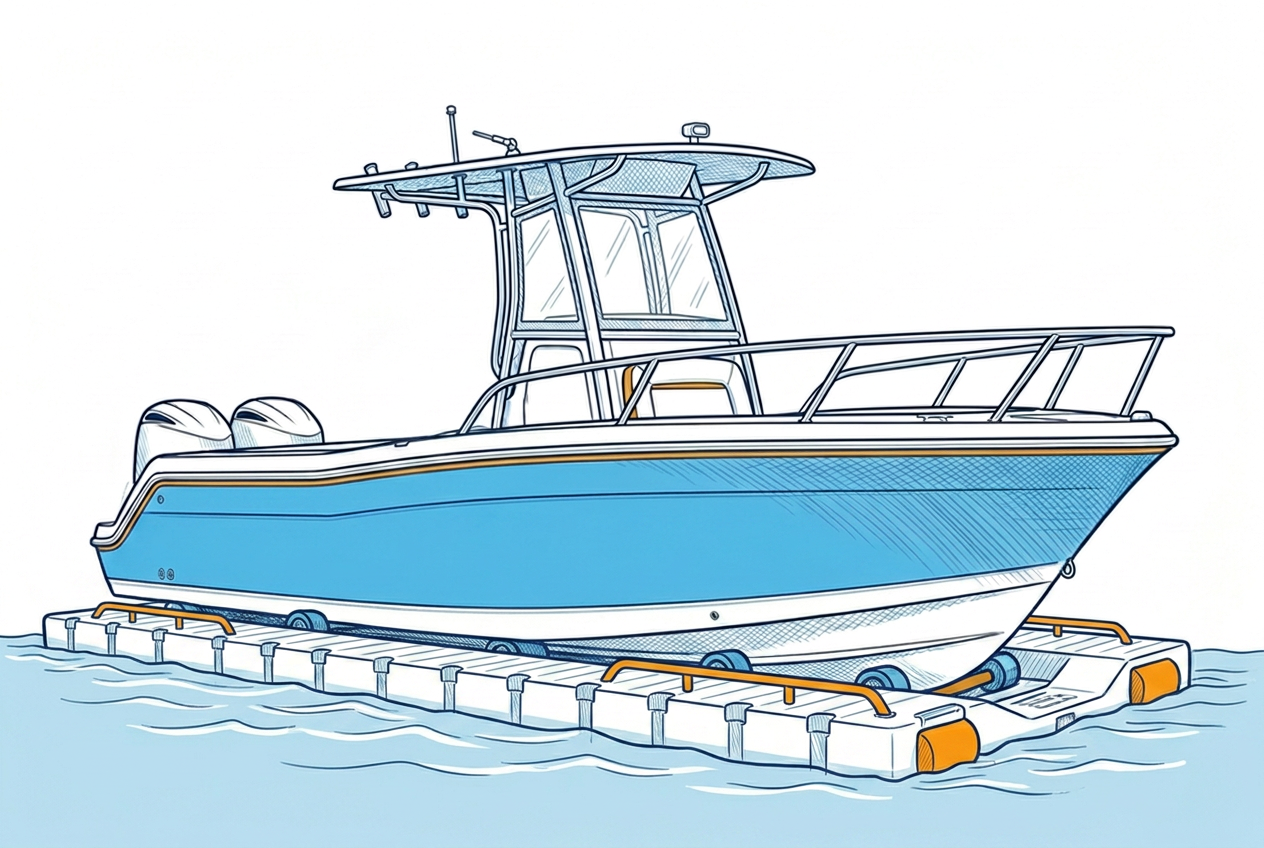
Boat on a floating jet dock

Jet dock

on form: Jet Dock
Why
Sits up out of the water on a floating platform — UV and water repellency.
Boat stored in the water at a dock

In water / mooring

on form: In Water
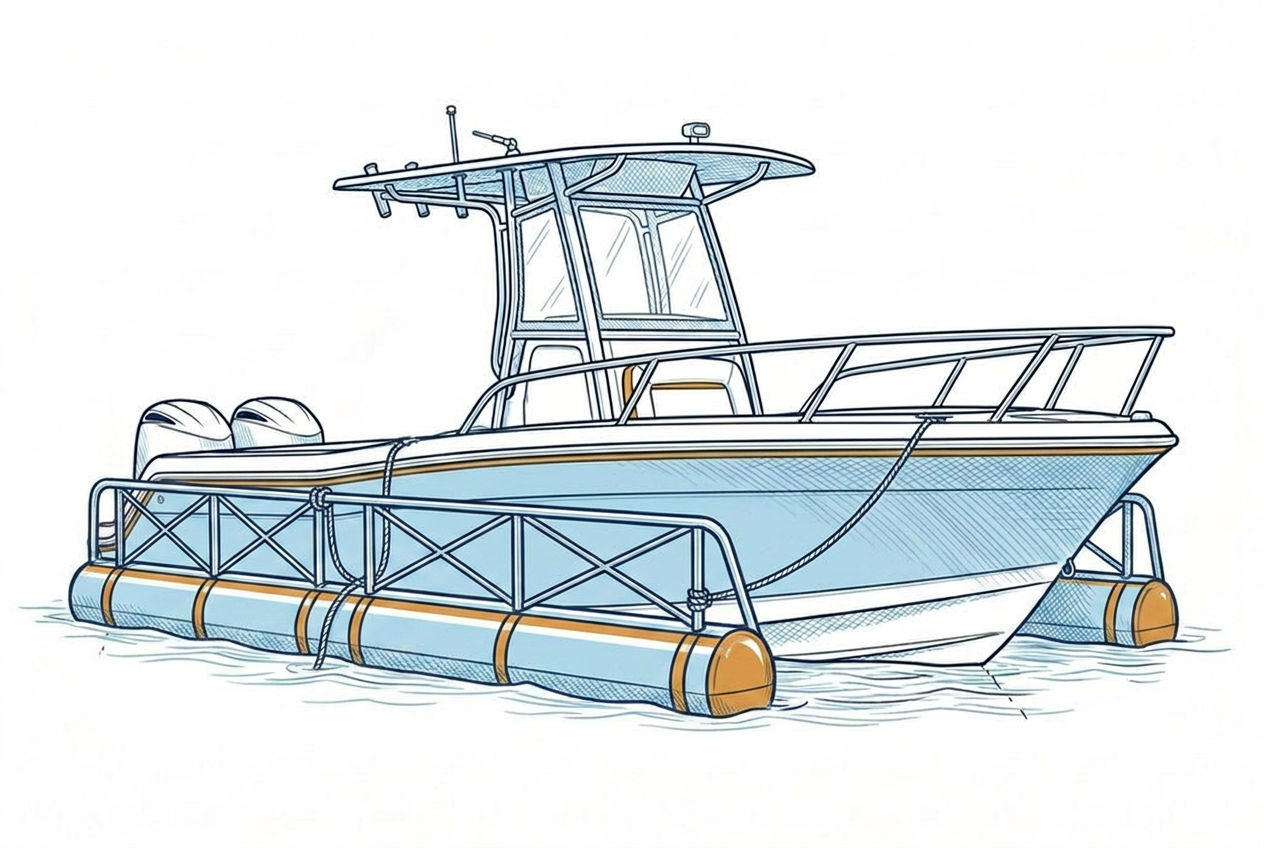
Why
The console and helm stay exposed — consider a center console curtain too.
Boat in a floating sea pen

Sea pen

on form: Sea Pen
Why
Floating enclosure — plan for constant moisture and heavy sun.

8 · A few fit details

Zipper access side (Port / Starboard / Center-rear)

Which side we put the entry zipper on — so it lands where it’s convenient for how you board and reach the console under the cover.

Year, make & re-power

Hull molds and rigging change year to year, and engine brands differ in size. Your model year, motor make, and whether you’ve re-powered dial the pattern to your exact rig at the transom.

Fabric & color

Fabric weight (7 oz / 9 oz / Sunbrella) and color set the warranty — up to 6 years. All are marine-grade, solution-dyed, and water-repellent (not a sealed “waterproof” coating that traps moisture and grows mildew).

Custom-Made to Order Made in the USA Up to 6-Year Fabric Warranty

That’s why the form looks long — every question removes a guess.

A universal cover skips all of it and hopes your boat is “close enough.” When you answer these, you get a cover cut to your boat, your top, your rigging, and your aftermarket add-ons. That’s the whole idea behind Perfect Fit.

Find my cover by make & model → Read the buyer’s guide
A free guide by Perfect Fit Boat Covers — custom-fit, water-repellent, made-in-USA covers for center console & T-top boats.
Sign up for updates and information about our business

    } }) } } } }) } } } } })